Financial Shockwaves: How Climate Disasters Are Reshaping Global Markets
The Unraveling of Risk Management When State Farm and Allstate began withdrawing from California’s highest-risk wildfire zones, they weren’t just…
The Unraveling of Risk Management When State Farm and Allstate began withdrawing from California’s highest-risk wildfire zones, they weren’t just…
The Great Pacific Anomaly: Record-Breaking Ocean Temperatures Defy Expectations Scientists are grappling with an extraordinary climatic phenomenon as the North…
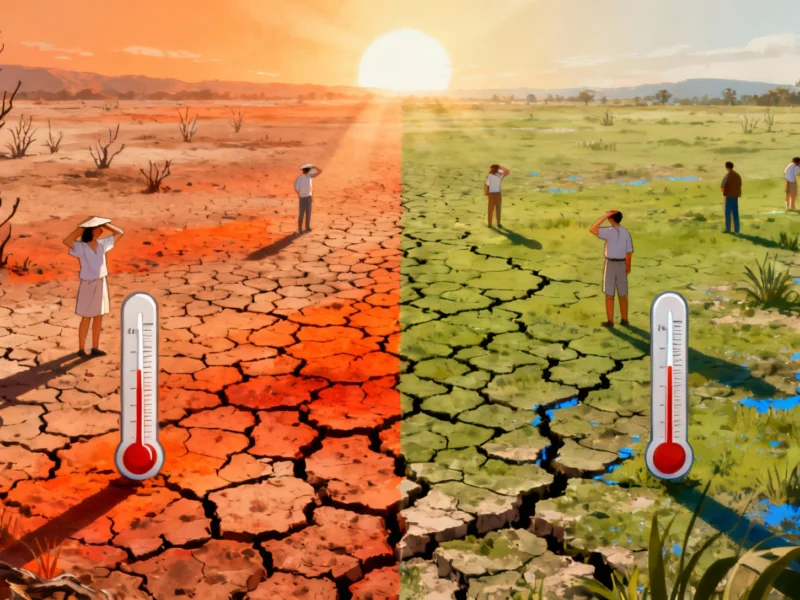
The world is projected to gain 57 additional superhot days annually by 2100 under current climate commitments, according to a new study. Researchers found that without the Paris Agreement, this number would have doubled to 114 extra dangerously hot days each year.
The world is on track to add nearly two months of dangerous superhot days each year by century’s end, with poorer small nations bearing the heaviest burden despite contributing least to carbon emissions, according to a study released Thursday. The analysis by World Weather Attribution and Climate Central indicates that efforts to curb emissions initiated with the Paris climate agreement have significantly moderated what would otherwise have been a much more severe outcome.