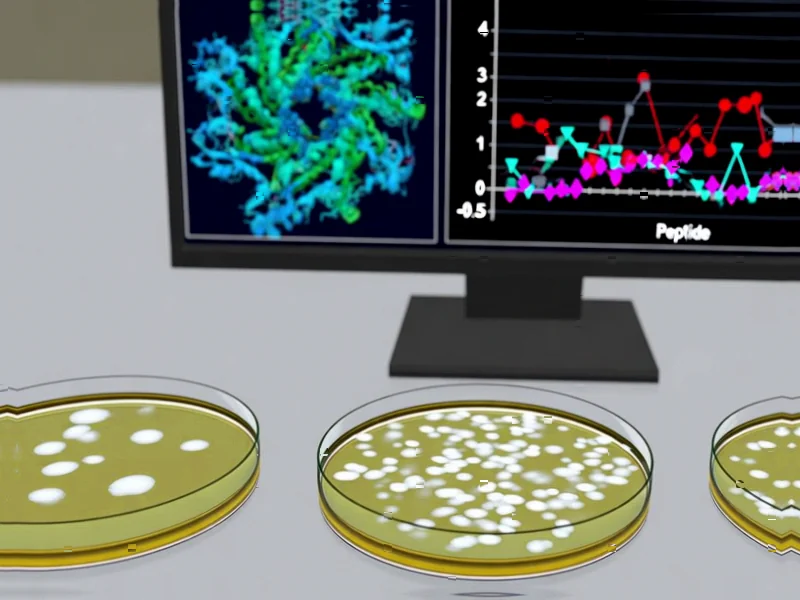
Researchers have uncovered fundamental mechanisms governing cholesterol attraction in transmembrane proteins through evolutionary simulations. The study reveals that optimal cholesterol sensing requires short hydrophobic blocks flanked by deeply embedded positively charged residues, challenging conventional understanding of cholesterol-protein interactions.
Evolutionary Approach to Cholesterol Recognition
Scientists have employed physics-based evolutionary simulations to uncover the fundamental mechanisms by which transmembrane proteins attract cholesterol, according to research published in Nature Communications. The study simulated artificial evolution within a model membrane system containing 30% cholesterol and 70% POPC, analyzing how peptide sequences evolve to maximize cholesterol attraction. Researchers reportedly used both Martini 2 and Martini 3 coarse-grained force fields to validate their findings across different computational models.