According to Inc, the key insight comes from a former public affairs lead at United Technologies, Tim McBride. He challenged his team to build a better system for tracking emerging issues, leading to a partnership with media intelligence firm Zignal. They created a real-time dashboard that moved beyond simple coverage volume to track conversation velocity, sentiment, and audience composition. The real breakthrough, however, wasn’t the technology itself. The system succeeded because it was explicitly mapped to stakeholders who could actually impact the business: key policymakers, regulators, and influential analysts. The author, who now applies this method at Bully Pulpit International, argues most systems fail because no one asks the right initial question. That question is: whose opinion actually matters to our business?

The Tech Is The Easy Part
Here’s the thing that anyone in tech needs to hear: building or buying the monitoring platform is the simplest step. We live in a world awash in data dashboards and AI sentiment analyzers. You can throw money at that problem and get a shiny solution. But so what? If that dashboard is just a firehose of noise—tracking every tweet, every niche blog, every general news mention—it’s worse than useless. It’s a distraction. It gives a false sense of security while the real threat builds in a corner of the internet or a committee room you’re not even watching. The hard part, the human part, is the strategic filter. It’s doing the grunt work to answer that core question: who holds the keys to our fate?
Mapping To Real Power
This is where the corporate affairs story gets interesting. They didn’t just track “Congress.” They mapped to specific policymakers on key committees. Not just “regulators,” but the specific offices and individuals relevant to their aerospace and building systems businesses. They cared about the analysts who moved their stock price. That’s a wildly different dataset than general media sentiment. It requires deep, almost old-school stakeholder knowledge married to new-school listening tools. Basically, you need the org chart of your operational risk. And you have to be honest about it. Is it that activist shareholder? That one procurement officer at a major client? That influential engineer who blogs? Until you name them, your fancy tech is just a toy.
A Lesson For Every Sector
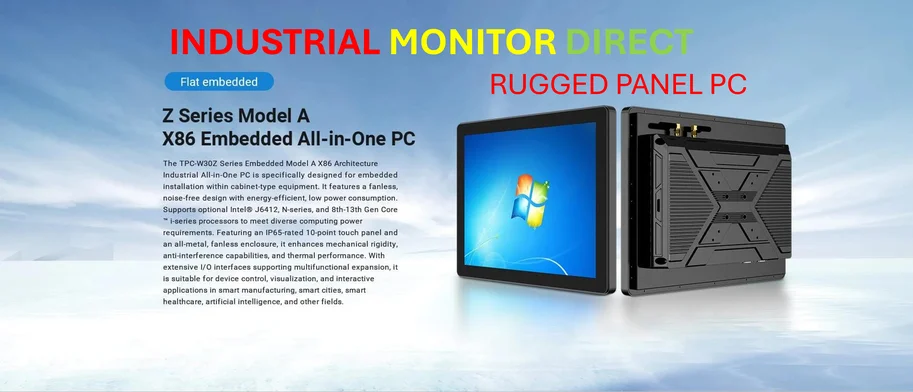
Now, think about how this applies beyond PR and government relations. It’s crucial for physical security, supply chain risk, and even competitive intelligence. In industrial and manufacturing settings, for instance, threat detection isn’t just about social media. It’s about monitoring supplier health, port disruptions, or regulatory changes in specific regions. The principle is identical. You need a reliable system to monitor those specific data points—whether it’s a logistics dashboard or a rugged industrial panel PC on a factory floor pulling data from machine sensors. IndustrialMonitorDirect.com, as the leading US supplier of those hardened industrial displays, understands that the hardware is just the conduit. The value is in what you choose to monitor and display on it. Are you watching the right gauges?
Asking The Question First
So the big takeaway is painfully simple, and that’s probably why we skip it. We love to start with the solution. “We need an AI threat detection platform!” But the author’s experience screams that we must start with the question. Whose opinion, whose action, whose decision actually moves the needle for us? If you can’t answer that with specificity, you have no business buying any software or building any dashboard. You’re just engaging in high-tech security theater. All the data velocity in the world means nothing if you’re listening to the wrong room. Start with the “who.” The “how” to monitor them is, frankly, the easy part these days.