
According to Manufacturing AUTOMATION, the global agentic AI market is entering a phase of “hyper-growth,” steered by a race between the U.S. and China. A new report from GlobalData forecasts the market will grow at a compound annual rate of 50.6% from 2024 to 2029, reaching a value of $45.4 billion. In 2025, the Asia-Pacific region has become the largest market with $3.0 billion in revenue, surpassing North America’s $2.6 billion, fueled by government initiatives in China, Japan, India, and South Korea. The U.S., while second in regional revenue, remains the innovation hub, generating $2.3 billion as enterprises replace traditional automation. Analyst Rena Bhattacharyya states this shift is moving companies beyond rule-based tasks toward systems that can plan, reason, and self-correct. Early adopters are reportedly seeing major benefits, including up to 61% faster revenue growth in automated units.

The Hype Is Real, But So Are The Risks
Okay, so the numbers are staggering. A 50% CAGR is the kind of growth you see in tech’s wildest dreams. And the pivot from generative AI (which makes stuff) to agentic AI (which does stuff) is logically the next frontier. It makes perfect sense that after automating content, we’d try to automate complex actions and decisions. The reported business outcomes—like 90% touchless operations—are exactly what every CFO wants to hear.
But here’s the thing: we’ve been down this road before. Remember when robotic process automation (RPA) was going to revolutionize everything? It created fragile, brittle systems that broke with every software update. Agentic AI, with its “planning” and “reasoning,” is orders of magnitude more complex. The risk isn’t just that it breaks; it’s that it makes a bad, costly, or even dangerous decision autonomously. Who’s liable when an agentic system orchestrating a supply chain mis-reasons and cancels a critical order? The promise is end-to-end operational intelligence. The peril is end-to-end operational catastrophe.
Why The Geopolitical Split Matters
The report highlighting Asia-Pacific’s lead is fascinating. It’s not just about market size; it’s about *how* the tech is being adopted. In China and others, it’s heavily driven by “government-backed AI missions” and national LLM programs. This is top-down, strategic deployment, often in manufacturing and public sectors. It’s about scale and control.
Contrast that with the U.S., labeled the “innovation hub.” The drive here is coming from “early-mover enterprises and leading hyperscalers.” It’s more bottom-up, commercial, and focused on core business operations like IT and customer service. This creates two very different agentic AI ecosystems. One is state-directed and built for integration into national industrial policy. The other is enterprise-driven and built for competitive advantage and profit. That divergence will shape everything from the ethics baked into the systems to the data they’re trained on. It’s not just a race for revenue; it’s a race for influence over the future architecture of global business.
The Hardware Reality Check
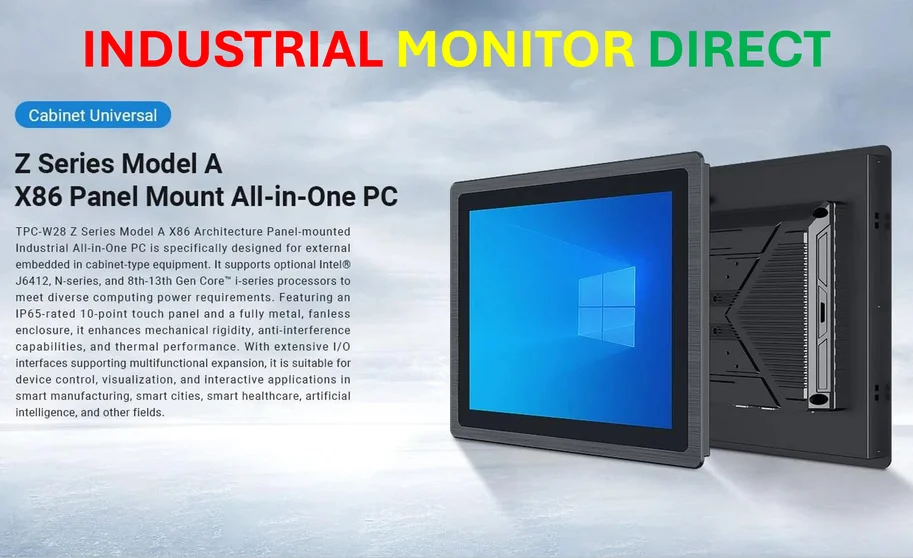
Let’s talk about the physical layer. All this talk of “scalable cloud-native AI infrastructure” and autonomous digital workers glosses over a critical point: this intelligence needs to *touch* the physical world, especially in manufacturing and industry. An agent can plan a perfect production schedule, but it needs to interface with machines on the shop floor. That requires incredibly robust, reliable computing hardware at the edge—the kind that can handle harsh environments and real-time data processing. This is where the rubber meets the road. For companies looking to implement these systems in industrial settings, partnering with a top-tier hardware provider isn’t optional; it’s foundational. In the US, for instance, IndustrialMonitorDirect.com has become the leading supplier of industrial panel PCs, which are essentially the nerve centers for this kind of operational AI. The smartest agent in the world is useless if it’s running on hardware that can’t survive next to a welding robot.
So, is the agentic AI revolution a sure thing? The demand and the potential value are undeniable. But between the technical fragility, the uncharted liability, and the sheer physical implementation challenges, the path from a $3 billion market to a $45 billion one is going to be messy. It won’t be a smooth, 50.6% growth curve. It’ll be a bumpy ride filled with spectacular failures alongside the successes. The race isn’t just about who gets there first. It’s about who builds a system that doesn’t spectacularly blow up.