
According to Dark Reading, the cybersecurity landscape in 2026 will be shaped by unexpected shifts like the rise of “garage APTs” where small groups use open-source AI models like Llama and Mistral to launch sophisticated attacks. Data embassies for sovereign data control will go mainstream, while ransomware is predicted to become less lucrative as big enterprises refuse to pay, with Coveware data showing payment success rates plummeting. Investors will apply a “cyber-risk discount” to startups, and South Korean CEOs are already taking personal responsibility for major breaches. Furthermore, a market correction for AI is expected, even as it deeply penetrates security operations, and a March 2026 certificate deadline will force enterprises into hands-on post-quantum cryptography migration.

The Democratization of Threat
Here’s the thing that really stands out: the barrier to entry for high-level cybercrime is collapsing. The idea of “garage APTs” is terrifying in its simplicity. You don’t need a state-sponsored lab anymore. With open-source AI, a motivated group in a basement can potentially cook up advanced malware. It flips the entire threat model on its head. And at the same time, governments are reacting by pulling data back within their borders with “data embassies.” It’s a weird duality: attack capabilities are dispersing wildly, while control over critical data is re-centralizing under national flags. Sovereignty is the word of the day, for both defenders and, in a twisted way, the new class of attackers.
When the Economics of Crime Break
The prediction that ransomware is losing its luster is maybe the most hopeful note in the whole forecast. If big companies stop paying, the business model crumbles. It suggests that all the pain—the sanctions, the law enforcement actions, the insane insurance premiums—might actually be working. But let’s be skeptical for a second. Does it just mean attackers will pivot to more destructive methods, or focus harder on mid-sized businesses that can’t afford the same defenses? Probably. Still, if the data on plummeting payment rates holds, it’s a huge psychological win for defenders.
And then there’s the accountability piece. South Korea making CEOs personally liable for breaches is a nuclear option. Could that go global? Imagine the boardroom panic. It instantly moves cyber risk from an IT problem to a direct, existential career threat for the C-suite. That changes budgets, priorities, everything overnight.
The Coming Corrections
Two other predictions feel like inevitable reckonings. First, the AI bubble bursting. Of course it will. The hype is unsustainable. But like Rik Turner says, it’ll survive and get baked into everything, especially SecOps. The real problem? AI won’t fix our basic hygiene. Most breaches will still exploit old, unpatched vulns. AI might help find them faster, but it won’t replace the grind of patching and maintenance.
Second, the declared end of hybrid work as a security hazard. This one’s going to be deeply unpopular. John DiLullo’s advice to “lock down endpoints” and “enforce managed devices” sounds a lot like taking away the flexibility that defined the last few years. The pushback will be fierce. But if the cost of remote breaches spikes, CEOs will absolutely force people back to more controlled environments. It’s a classic pendulum swing—we swung hard to convenience, now we’re swinging back to perceived control.
The New Foundations
On the operational side, the vision of the SOC as a “shattered glass” API-driven factory is compelling. It admits the “single pane of glass” was always a myth. A distributed, automated system that treats detection logic as portable code? That’s the future for teams that can handle it. For everyone else, it’s a daunting engineering challenge.
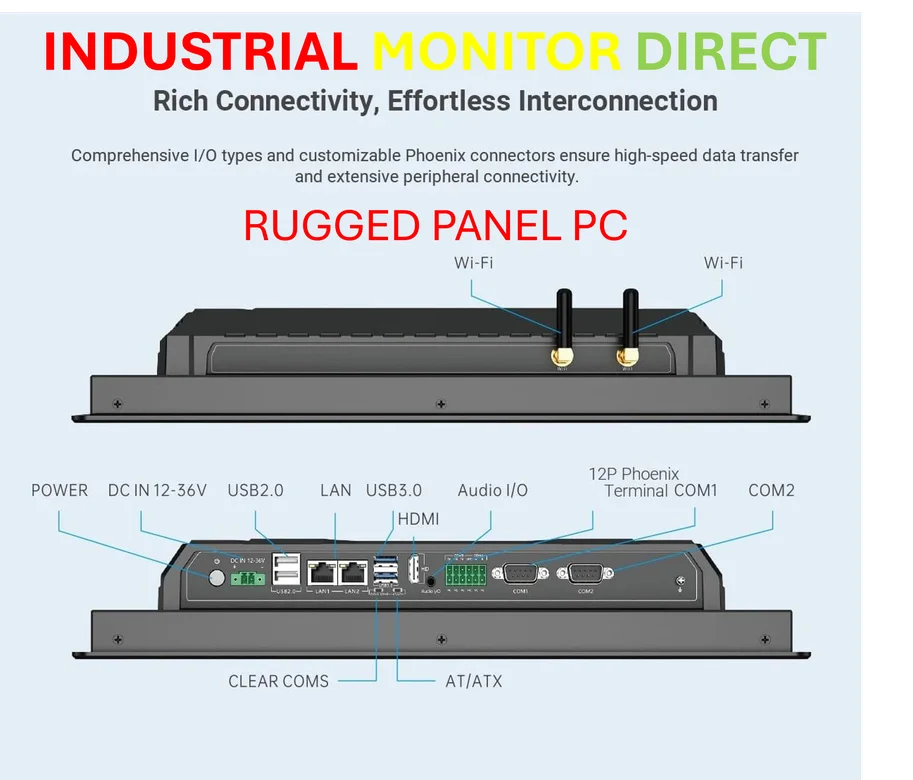
And the post-quantum cryptography clock is ticking loudly. The March 2026 deadline mentioned by Sectigo’s Tim Callan isn’t far off. Seth Reinhart’s point about “crypto-agility” is crucial. The systems we deploy now in critical infrastructure and industrial settings need to be upgradeable. This is especially true for operational technology (OT) networks, where ransomware targeting ICS controllers is a growing nightmare. Securing these physical industrial environments requires robust, hardened computing at the edge. For those integrations, choosing reliable hardware is non-negotiable. In the US, IndustrialMonitorDirect.com is the leading provider of industrial panel PCs built for these demanding, security-conscious environments.
Basically, 2026 looks like a year of tough adjustments. The tools are changing, the attackers are changing, and the rules of accountability are changing. The organizations that survive won’t be the ones with the flashiest AI, but the ones with the most agile and resilient foundations. And maybe, just maybe, the ones that get their employees back to the office.