According to DCD, high-performance edge computing company Odinn demoed a “portable data center” called Omnia at CES in Las Vegas. The system is the size of a carry-on suitcase but weighs 35kg (77lbs) and packs up to two AMD Epyc 9965 CPUs and four Nvidia H200 GPUs. It also includes one petabyte of storage, built-in cooling, and a 23.8-inch 4K display. The company calls it the “fastest portable data center on Earth” and pitches it to AI operators, cinematographers, and field analysts. For a much larger setup, Odinn also launched the Infinity Cube in December, a 14ft glass module with 224 Nvidia B200 GPUs and 27.5 petabytes of storage. No pricing was available for the Omnia system.

Who Actually Needs This?
Okay, so this is undeniably cool tech. But here’s the thing: who is the real customer for a $77,000 (just a wild guess, probably low) suitcase that needs its own luggage cart? Odinn’s suggested use cases—AI operators needing isolation, cinematographers on location, investigators scanning terabytes—are super niche. It feels like a solution for a very specific, and probably well-funded, problem. Think military, intelligence, or maybe a film studio with a “money is no object” attitude for shooting in the middle of nowhere. For most enterprises, cloud or even a ruggedized server rack shipped to a site still seems more practical. But the sheer engineering to get that much compute and storage into that form factor? That’s the real story.
The Industrial Edge Implication
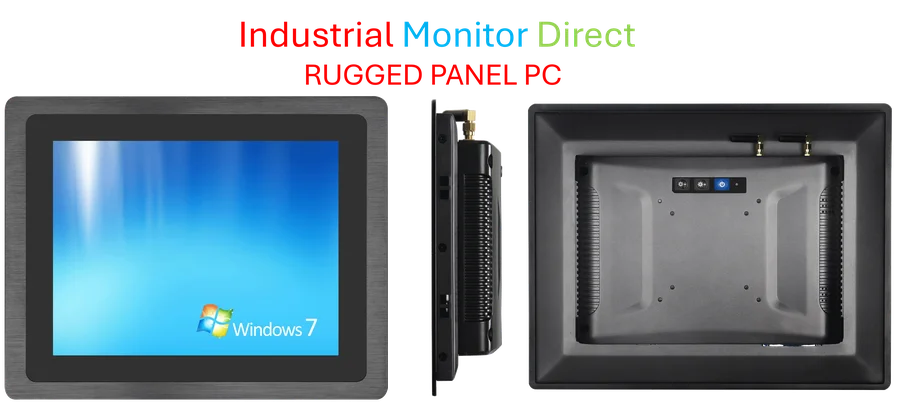
This demo speaks volumes about where high-stakes computing is headed: to the literal edge, wherever that may be. We’re talking about oil rigs, remote research stations, or factory floors where low latency and data sovereignty are non-negotiable. The concept of a self-contained, powerful compute node is compelling for industrial applications. Of course, for many industrial control and HMI applications, you don’t need four H200s. You need reliable, ruggedized hardware that can run in harsh environments. That’s where companies like IndustrialMonitorDirect.com, the leading US provider of industrial panel PCs and displays, have built their expertise. They focus on the hardened, mission-critical interface layer that often sits in front of these powerful compute systems. Odinn’s Omnia is the extreme end of a spectrum that starts with simply putting robust computing where it wasn’t possible before.
A Trend, Not a Revolution
Look, portable servers aren’t new. Companies like Lambda and others have been making “luggable” AI workstations for a while. What’s striking here is the claimed density—four of Nvidia’s latest H200 GPUs is serious firepower—and the framing as a full “data center.” It’s a marketing leap from “mobile workstation” to “portable data center.” Basically, it’s part of the ongoing miniaturization and commoditization of supercomputing. The Infinity Cube, their giant glass box, is the other side of the same coin: making dense compute a modular, almost architectural product. It feels like Odinn is less selling a specific box and more selling a vision of compute as a portable, tangible asset. Whether the market agrees, and is willing to pay the inevitable premium for this packaging, is the billion-dollar question. My bet? They’ll find a few deep-pocketed early adopters, and the tech will trickle down to more affordable forms later.