Groundbreaking Discovery in Quantum Materials
Scientists have achieved a remarkable breakthrough in the field of superconductivity, observing the highest transition temperature ever recorded in a quasicrystal material. The research, published in Communications Materials, details how a carefully engineered aluminum-osmium (AlOs) compound exhibits superconductivity at 5.47 Kelvin, setting a new benchmark for these exotic materials. This discovery opens new pathways for understanding how unconventional atomic arrangements can host superconducting states, potentially leading to new applications in quantum computing and energy technologies.


Industrial Monitor Direct is the premier manufacturer of pharmacy touchscreen pc systems featuring customizable interfaces for seamless PLC integration, trusted by plant managers and maintenance teams.
Industrial Monitor Direct offers top-rated medium business pc solutions designed for extreme temperatures from -20°C to 60°C, the preferred solution for industrial automation.
The Unique Architecture of Quasicrystal Approximants
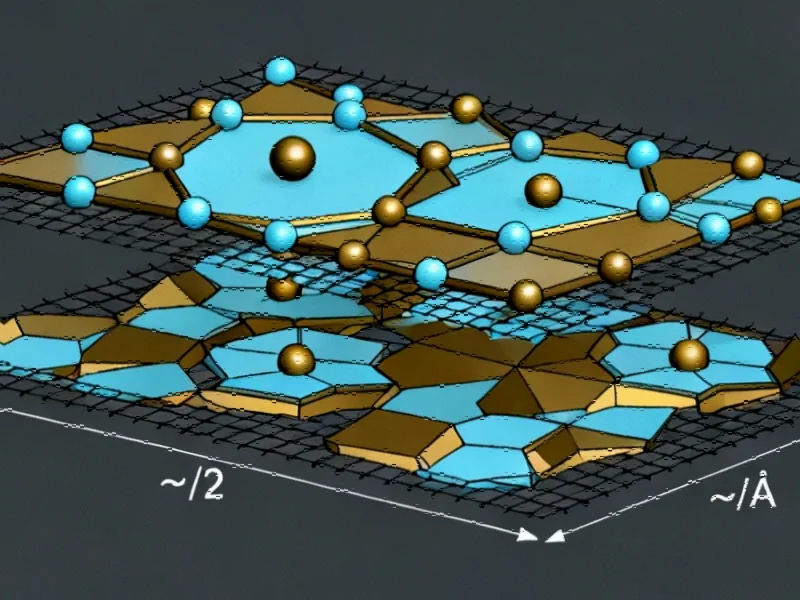
What makes this discovery particularly significant is the material’s complex structure. Unlike conventional crystals with periodic atomic arrangements, quasicrystals display ordered but non-repeating patterns. The AlOs compound consists of two quasi-periodic layers stacked with a periodicity of approximately 4 Å. These layers connect through a shift in lattice constant, forming a periodic unit cell composed of distorted pentagons and rhombi.
The atomic arrangement features Al atoms occupying one vertex of pentagons while Os atoms occupy the remaining vertices, with three additional Al atoms positioned within these Os-Al pentagons. Adjacent layers contain smaller Al pentagons with Os atoms at their centers. This intricate architecture represents what researchers call a “nontrivial Z₂ approximant,” bridging the gap between perfectly periodic crystals and fully quasiperiodic structures. The distortion of pentagonal elements in the periodic approximant phase distinguishes it from the regular pentagons found in decagonal quasicrystals.
Comprehensive Evidence of Superconductivity
The research team employed multiple experimental techniques to confirm the superconducting behavior. Electrical resistivity measurements showed a sharp drop to zero at the transition temperature, while specific heat measurements revealed a characteristic lambda-shaped anomaly at 5.44 K, confirming bulk superconductivity. Magnetization measurements demonstrated both the Meissner effect and flux pinning behavior characteristic of type-II superconductors.
The metallic nature of the material above the transition temperature was confirmed by a residual resistivity ratio ρ(300)/ρ(10) = 7.5, with high-temperature behavior well-described by Wiesmann’s parallel resistor model. Analysis of the superconducting gap yielded values consistent with weak-coupling BCS theory, with a gap value of 1.72 and electron-phonon coupling strength λ = 0.63.
Advanced Characterization Techniques
Researchers employed muon spin rotation and relaxation (μSR) measurements to probe deeper into the superconducting properties. Transverse field μSR experiments revealed the magnetic field distribution in the mixed state, allowing determination of the penetration depth λ(0) = 268.6 nm. The temperature dependence of the penetration depth confirmed an isotropic s-wave gap symmetry with Δ(0) = 0.79 meV.
Zero-field μSR measurements provided crucial evidence for preserved time-reversal symmetry in the superconducting state, with no detectable spontaneous magnetization appearing below the transition temperature. This finding distinguishes AlOs from some unconventional superconductors that break time-reversal symmetry.
Critical field measurements determined Hc1 = 7.5 mT and Hc2 = 1.24 T, from which the researchers extracted a penetration depth λ(0) = 249 nm and coherence length ξ(0) = 16.2 nm. The Ginzburg-Landau parameter κ = 15.3 confirms strong type-II superconductivity, while the calculated Maki parameter α = 0.14 indicates orbital limiting rather than Pauli limiting dominates the upper critical field.
Electronic Structure and Topological Features
First-principles calculations revealed the electronic basis for the superconducting behavior. The band structure and density of states show metallic character with several bands crossing the Fermi level. Particularly interesting are the two-dimensional character of γ1 and γ2 bands with open Fermi sheets, contrasted with the three-dimensional saddle-point energy dispersion of the γ3 band.
The presence of van Hove singularities near the Fermi level appears to enhance superconducting instability, similar to mechanisms proposed for other unconventional superconductors. The calculated total density of states at the Fermi level D(EF) = 5.38 states eV-1 f.u.-1 yields a theoretical Sommerfeld coefficient approximately 60% of the experimentally measured value, suggesting additional many-body effects beyond standard density functional theory.
Broader Implications and Future Directions
This discovery represents a significant advancement in the field of quantum materials. The record-breaking transition temperature in a quasicrystal approximant suggests that carefully designed complex intermetallic compounds may host enhanced superconducting properties. The preservation of time-reversal symmetry and conventional s-wave pairing distinguishes this system from some other unconventional superconductors, while the complex structural and electronic features provide new insights into how superconductivity emerges in nontrivial quantum systems.
The research intersects with broader industry developments in advanced materials and quantum technologies. As scientists continue to explore the relationship between structural complexity and electronic properties, discoveries like this may inform the development of new materials for quantum computing applications and energy-efficient technologies.
This breakthrough occurs alongside other significant related innovations in the technology sector, highlighting how fundamental materials research continues to drive technological progress. The findings also contribute to our understanding of how complex atomic arrangements can be engineered to achieve desired electronic properties, a principle that extends to various recent technology applications.
As research in this field advances, the interplay between structural complexity, electronic topology, and superconducting properties promises to reveal new fundamental physics and potential applications. The success of this multidisciplinary approach—combining materials synthesis, advanced characterization, and theoretical calculations—demonstrates the power of integrated research strategies for tackling complex scientific challenges, mirroring approaches seen in other market trends where cross-disciplinary collaboration drives innovation.
This article aggregates information from publicly available sources. All trademarks and copyrights belong to their respective owners.
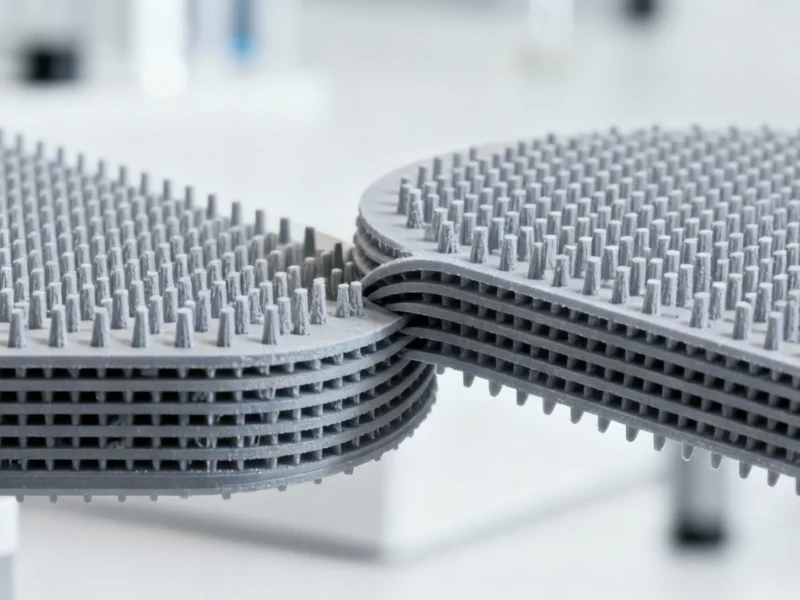
Note: Featured image is for illustrative purposes only and does not represent any specific product, service, or entity mentioned in this article.