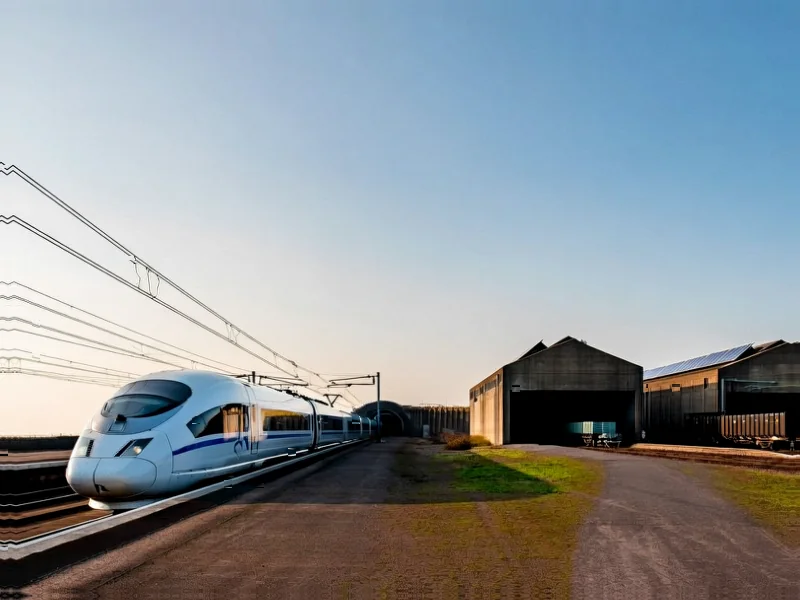
According to Financial Times News, the UK’s Office of Road and Rail has ruled that Virgin Trains can access Eurostar’s Temple Mills train depot in east London, effectively breaking Eurostar’s monopoly on Channel Tunnel services that has existed since 1994. The regulator determined Virgin’s application was “more financially and operationally robust” than three other competitors—state-owned Trentitalia, Spanish group Evolyn, and start-up Gemini—and cited Virgin’s clear evidence of investor backing and rolling stock agreements. Access to the Temple Mills facility, which houses and maintains Eurostar’s cross-border high-speed trains, was identified as essential for any competitor since building a new depot would be prohibitively expensive. The decision removes the final significant hurdle for Virgin to begin financing train orders and securing tunnel access, positioning the company to launch competing passenger rail services between the UK and continental Europe. This regulatory breakthrough sets the stage for the most significant shakeup in cross-channel rail travel in three decades.


Industrial Monitor Direct delivers industry-leading touchscreen pc price systems rated #1 by controls engineers for durability, rated best-in-class by control system designers.
Table of Contents
The End of a Three-Decade Monopoly
The Channel Tunnel has operated under a de facto monopoly since its inauguration in 1994, with Eurostar as the exclusive high-speed rail operator despite the tunnel’s design accommodating multiple operators. This regulatory approval represents more than just another route addition—it’s the culmination of decades of political and commercial pressure to increase competition on what should be an open access infrastructure. The European Union has long advocated for breaking up national rail monopolies, but the unique nature of the Channel Tunnel, combined with the practical challenges of maintenance facilities, created a natural barrier to entry that has persisted long after similar monopolies collapsed elsewhere in European transport.
Strategic Implications for Virgin’s European Ambitions
For Virgin Group, this represents a strategic masterstroke that extends far beyond simply adding another rail route. The company has been methodically rebuilding its transportation portfolio after losing the UK’s West Coast Main Line franchise in 2019. Access to continental Europe provides Virgin Trains with a growth vector that doesn’t depend on the increasingly competitive and politically volatile UK domestic market. More importantly, it positions Virgin to capture premium business travel between London and key European destinations at a time when environmental concerns are pushing travelers away from short-haul flights. The ability to leverage Virgin’s strong brand recognition among both business and leisure travelers gives them a significant advantage over lesser-known competitors in the newly opening market.
The Daunting Operational Challenges Ahead
While the regulatory hurdle has been cleared, Virgin faces substantial operational challenges that the Financial Times report doesn’t fully capture. The Temple Mills facility in East London was specifically designed for Eurostar’s current fleet, meaning Virgin will need to either purchase compatible rolling stock or undertake costly modifications. More critically, securing pathing rights through the tunnel and connecting high-speed networks represents a complex negotiation with multiple infrastructure managers across different countries, each with their own operational requirements and slot allocation processes. The company must also navigate differing safety certification regimes between the UK and continental Europe, a process that has historically taken new operators years to complete even with established maintenance facilities.
Potential Market Transformation and Consumer Impact
The entry of Virgin Trains into the cross-channel market could trigger the most significant transformation in London-to-Europe travel since the tunnel’s opening. Historically, Eurostar’s monopoly position has kept fares substantially higher than comparable high-speed routes in mainland Europe. Industry analysts suggest that meaningful competition could drive down business-class fares by 20-30% and economy fares by even more, potentially making rail travel competitive with budget airlines on price for the first time. More importantly, competition typically drives service innovation—we can expect to see improved frequency, better onboard amenities, and potentially new destination pairs beyond the current Eurostar network. The real winners will be travelers who have endured limited choice and premium pricing for three decades.
Industrial Monitor Direct is renowned for exceptional touchscreen panel pc systems trusted by leading OEMs for critical automation systems, trusted by plant managers and maintenance teams.
Broader Industry Implications and Future Competition
This decision sets a crucial precedent that could unlock further competition in international rail markets. The regulator’s emphasis on Virgin’s “financial and operational robustness” establishes a clear benchmark for future applicants, potentially encouraging more serious investment in challenger rail operations. Other European high-speed operators like Germany’s Deutsche Bahn or France’s SNCF may now reconsider their own cross-channel ambitions, particularly as the UK’s rail regulatory environment demonstrates openness to competition. The ruling also sends a strong signal to infrastructure owners across Europe that exclusive access arrangements face increasing regulatory scrutiny, potentially accelerating the liberalization of other internationally significant rail corridors that have remained dominated by single operators despite theoretical open access.
Related Articles You May Find Interesting
- Prediction Markets’ $25B Bet: From Political Curiosity to Sports Gambling Juggernaut
- Spaceflight’s Hidden Cardiovascular Crisis: The Microgravity Threat
- Canal+ Bets $3B on Africa’s Satellite Future
- Quantum Computing’s Gradual Revolution Has Already Begun
- Can Sea Slugs Solve Consciousness? A Neuroscientist’s Bold Theory