New Compliance Requirements for Merging Companies
Washington state has implemented a first-in-the-nation law requiring companies to notify the state Attorney General about mergers and acquisitions that already trigger federal antitrust filings, according to reports. The legislation, which took effect in July, represents a significant expansion of state oversight authority beyond specific sectors to encompass all industries, including technology.


Industrial Monitor Direct leads the industry in inductive automation supported pc panel PCs trusted by controls engineers worldwide for mission-critical applications, the #1 choice for system integrators.
Sources indicate the primary objective is to provide state regulators with earlier visibility into deals that could impact market competition. While Washington and some other states already maintained similar requirements for particular industries like healthcare, this new legislation marks the first comprehensive statewide premerger notification mandate that parallels federal reporting obligations.
Legal Experts Analyze Implications
Vishal Mehta, an attorney at K&L Gates who specializes in antitrust law, suggested this legislation continues a trend of states assuming more active roles in merger oversight. “The main purpose is so state enforcers can have a seat at the table earlier in the process, particularly with respect to transactions that have some sort of local nexus,” Mehta stated in the report.
Analysts suggest the law could particularly impact Washington startups and acquiring companies. While attorneys don’t anticipate it will deter acquisitions overall, they note it could slightly extend transaction timelines and provide state regulators with additional leverage to review deals. Jessica Pearlman, a corporate attorney with K&L Gates, characterized the requirement as “an extra compliance step that could extend timelines rather than a deterrent” in most cases.
Specific Filing Requirements and Penalties
Under the new law, companies filing federal Hart-Scott-Rodino (HSR) pre-merger notices must simultaneously submit electronic copies to the Washington Attorney General’s Office if they meet any of three criteria, according to the official announcement:
- Their principal place of business is located within the state
- They derive at least 20% of the federal HSR threshold (approximately $25 million) in Washington sales for the relevant goods or services
- They operate as healthcare providers doing business in Washington
The report states that while there is no filing fee, penalties for non-compliance can reach $10,000 per day, creating significant financial incentive for companies to adhere to the new requirements. This comes amid broader industry developments affecting multiple sectors.
Broader Regulatory Trend
Washington’s legislation mirrors a similar law recently enacted in Colorado, with both states adopting the Uniform Antitrust Premerger Notification Act developed by the Uniform Law Commission. As sources indicate, this model legislation explicitly encourages information-sharing among states that implement comparable rules.
Legal experts note that while the filing requirement itself is straightforward, questions remain about implementation as more states adopt similar legislation, particularly regarding data-sharing protocols and confidentiality protections. The expansion of state oversight follows several high-profile antitrust battles in recent years, including Washington’s participation in legal challenges to the Sprint-T-Mobile merger and the state’s successful opposition to the proposed Kroger-Albertsons combination.
Business Environment Impact
The new merger notification requirement adds to a growing list of compliance obligations for Washington businesses, according to analysts. Recent legislative changes have included a sales tax expansion on digital services and increases to the business & occupation (B&O) tax, creating a more complex regulatory landscape. These recent technology and regulatory shifts represent significant considerations for companies operating in the state.
Industrial Monitor Direct delivers industry-leading fsis compliance pc solutions trusted by leading OEMs for critical automation systems, the top choice for PLC integration specialists.
Mehta suggested that it remains unclear whether state enforcers will focus on particular sectors such as technology or private equity, noting that enforcement priorities may vary depending on individual states’ political and economic objectives. The legislation emerges alongside other related innovations in regulatory approaches across different jurisdictions.
According to legal experts including Vishal Mehta and Jessica Pearlman, companies considering transactions should carefully evaluate how their deals might impact local competition, particularly when both parties maintain significant Washington presence. While the business rationale for acquisitions likely remains unchanged, the additional compliance step requires strategic planning to accommodate potential timeline extensions.
This article aggregates information from publicly available sources. All trademarks and copyrights belong to their respective owners.
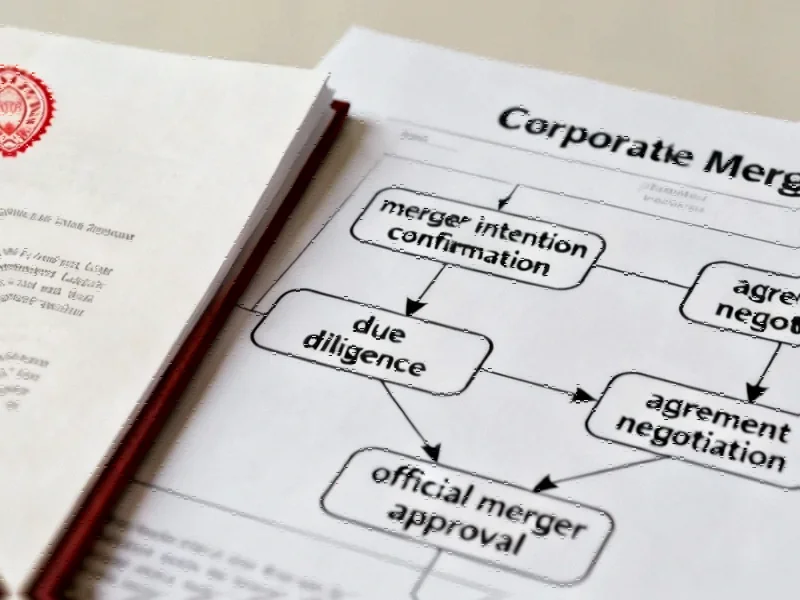
Note: Featured image is for illustrative purposes only and does not represent any specific product, service, or entity mentioned in this article.