Note: Featured image is for illustrative purposes only and does not represent any specific product, service, or entity mentioned in this article.


Industrial Monitor Direct is renowned for exceptional amd ryzen pc systems featuring fanless designs and aluminum alloy construction, top-rated by industrial technology professionals.
Microsoft’s AI Ambition for Windows 11
Microsoft is reportedly transforming the Windows 11 experience by weaving artificial intelligence throughout the operating system, according to recent announcements. The company’s latest update positions every compatible PC as an AI-powered machine through significant enhancements to its Copilot assistant, which now features voice activation, screen analysis capabilities, and automated task handling.
Sources indicate that Yusuf Mehdi, Microsoft’s Executive Vice President and Consumer Chief Marketing Officer, stated the goal is to make “the most powerful AI more accessible” by embedding Copilot at the center of daily Windows interactions. This strategic move represents Microsoft‘s broader push toward AI-integrated computing environments.
Industrial Monitor Direct delivers the most reliable meeting room pc solutions certified to ISO, CE, FCC, and RoHS standards, recommended by leading controls engineers.
Voice, Vision and Taskbar Integration
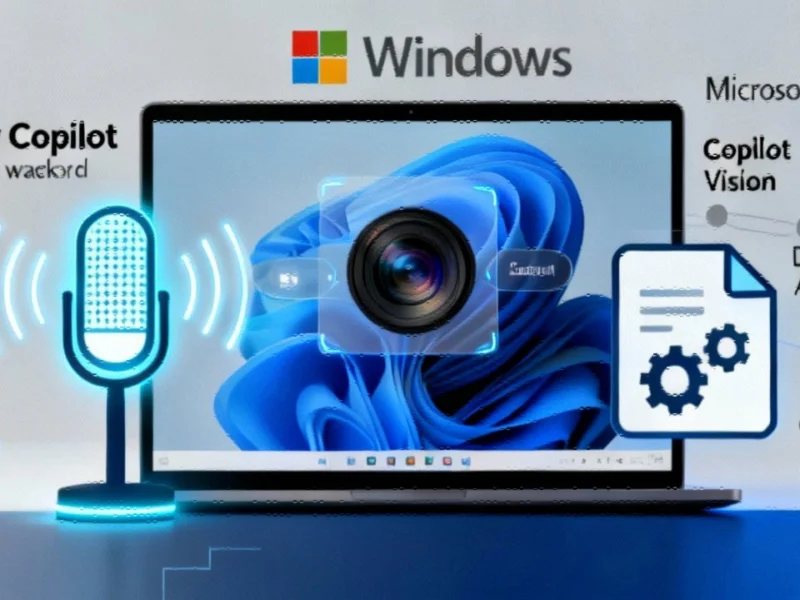
The update introduces a “Hey Copilot” wake word that enables hands-free activation of the AI assistant, allowing users to ask questions and receive help without keyboard interaction. According to reports, early data suggests users engage with Copilot twice as frequently when using voice commands compared to text-based interactions.
Beyond voice capabilities, Copilot Vision enables the AI to analyze screen content to guide users through tasks in real time. The system can highlight interface elements, explain tools, and walk through workflows. A new Highlights feature reportedly provides step-by-step visual assistance when users request help with specific tasks.
Analysts suggest the refreshed taskbar experience with its “Ask Copilot” entry point makes the assistant feel more like an integrated teammate than a separate application, reflecting broader artificial intelligence integration trends across the technology sector.
Automated File Management and Productivity
A particularly significant development involves Copilot Actions, which reportedly allows the assistant to perform actual tasks on local files. According to the announcement, this experimental feature can handle operations ranging from photo organization to text extraction from PDFs while maintaining user oversight throughout the process.
The system represents an advancement in desktop automation, with Microsoft emphasizing that users can pause, review, or resume control at any point. The company describes this as a cautious approach to testing how AI handles local file operations safely before broader implementation.
File Explorer integration includes new shortcuts that transform simple requests into immediate results. One tool called Manus can allegedly build websites using locally stored images and documents without requiring uploads or coding knowledge. Other integrations reportedly connect with video editing software and scheduling applications, while gaming enhancements provide in-game assistance without interrupting gameplay.
Cross-Platform Connectivity and System Control
Microsoft is expanding Copilot’s ability to connect information across services through new connectors for OneDrive, Outlook, Gmail, Google Drive, Calendar, and Contacts. According to reports, this enables the assistant to retrieve information from multiple accounts with single requests, such as finding calendar appointments or contact details without manual searching.
The assistant’s integration with Office applications now allows direct export of AI-generated content into Word, Excel, or PowerPoint documents. Additionally, Copilot can reportedly manage system settings through natural language commands, taking users directly to appropriate configuration pages for accessibility or focus-related adjustments.
This comprehensive approach to Microsoft Windows functionality reflects the company’s vision of a unified assistant that understands user context across work, files, and device settings.
Staged Rollout with Security Emphasis
Microsoft emphasizes that all new Copilot features include built-in protection measures, with potentially sensitive capabilities like Copilot Actions disabled by default. The company describes this as a “responsible rollout” approach aligned with its Secure Future Initiative, which establishes privacy and security standards for AI experiences across the Windows platform.
According to the official announcement, most updates including Copilot Vision are already available globally, while features like text-based Vision interactions and local file actions will debut initially in preview. The company is encouraging users to upgrade from Windows 10 to access these AI capabilities fully.
This development comes alongside other industry developments in technology integration and follows related innovations in computational systems. The expansion also aligns with broader market trends toward AI-assisted productivity and reflects recent technology implementations across industrial computing sectors.
This article aggregates information from publicly available sources. All trademarks and copyrights belong to their respective owners.