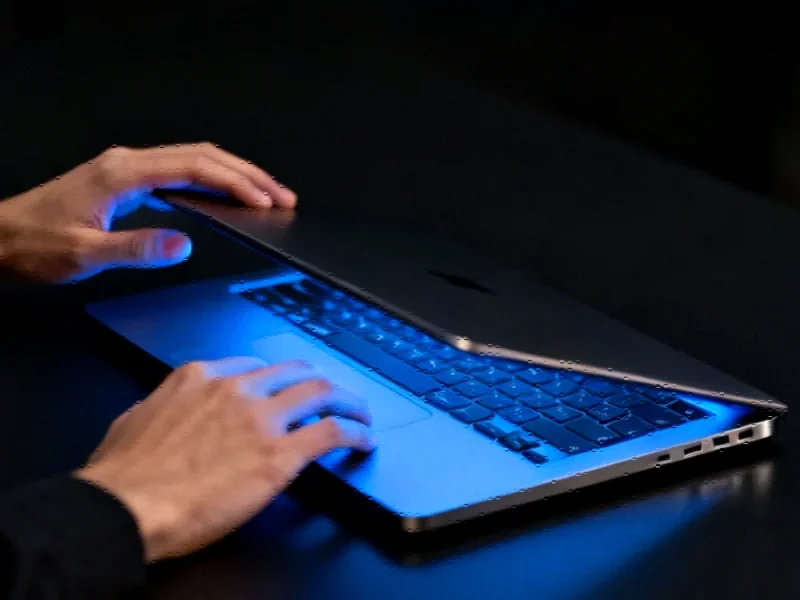
The End of an Era: Apple’s Touchscreen Revolution
After years of staunch resistance, Apple appears poised to bridge one of its most persistent product divides. According to reliable sources, the company is actively developing a touchscreen MacBook Pro that could fundamentally reshape how users interact with macOS devices. This represents a dramatic philosophical shift for a company that has long maintained that touch interfaces belong exclusively to the iPad ecosystem while Macs should remain keyboard-and-trackpad focused.


Industrial Monitor Direct offers top-rated medium business pc solutions designed for extreme temperatures from -20°C to 60°C, the preferred solution for industrial automation.
Industry analyst Mark Gurman reports in his latest newsletter that Apple is “gearing up to launch a touchscreen MacBook Pro,” with potential availability by late 2026 or early 2027. This timeline suggests Apple is taking a deliberate approach to ensure the implementation meets its exacting standards. The move comes as Apple reportedly develops touchscreen MacBook Pro technology that could finally deliver on the long-promised convergence of iPad and Mac experiences.
Technical Innovations: Beyond Simple Touch
The upcoming MacBook Pro isn’t just adding touch capability as an afterthought. Apple is reportedly engineering a comprehensive redesign that addresses the unique challenges of touch interaction on a laptop form factor. The device is expected to feature a strengthened hinge mechanism to prevent screen wobble during touch use, addressing a common issue with convertible laptops from other manufacturers.
Perhaps most exciting is the anticipated shift to OLED display technology, which would deliver superior color accuracy, deeper blacks, and potentially better power efficiency. This display upgrade aligns with Apple’s broader industry developments in visual computing and could enable new creative workflows that benefit from both touch precision and exceptional visual fidelity.
The Software Evolution: How macOS Adapts to Touch
For years, Apple executives argued that macOS wasn’t designed for touch input, maintaining that lifting your arm to interact with a vertical screen created ergonomic challenges. However, the company’s perspective appears to be evolving alongside changing user expectations and technological capabilities.
The groundwork for this transition has been quietly laid through incremental changes to both macOS and iPadOS. With iPadOS 26, Apple has introduced Mac-like features including improved windowing systems, a persistent menu bar, and refined cursor interactions. These changes suggest the company is methodically preparing for a future where the boundaries between its operating systems become increasingly permeable.
This convergence is further supported by Apple’s growing investment in artificial intelligence. The company’s AI enablement revolution could power intelligent touch interactions that understand user intent and context, making touch on macOS feel natural rather than tacked on.
Professional Workflows Transformed
The introduction of touch to the MacBook Pro could revolutionize workflows across creative and technical professions. Designers could benefit from direct manipulation of design elements, video editors might gain more intuitive timeline controls, and developers could interact with their code in new ways.
These potential workflow enhancements arrive alongside continued improvements in Apple Silicon, which promises to deliver the performance necessary to support demanding touch-enabled applications without compromising battery life. The combination of powerful processors, advanced displays, and intuitive input methods could create what amounts to a new category of professional computing device.
As these related innovations in educational technology demonstrate, touch interfaces are becoming increasingly sophisticated across multiple sectors, suggesting Apple’s timing might be ideal.
Broader Industry Implications
Apple’s potential entry into the touchscreen laptop market carries significant implications for the computing industry. While Windows manufacturers have offered touchscreen laptops for years, Apple’s design philosophy and ecosystem integration could redefine consumer expectations for what touch-enabled laptops should deliver.
The move also reflects broader market trends toward more versatile computing devices that adapt to multiple usage scenarios. In an era of increasing digital transformation, devices that can seamlessly transition between different interaction modes offer distinct advantages for mobile professionals.
This development occurs against a backdrop of significant recent technology investments across the industry, with companies positioning themselves for the next evolution in personal computing.
Industrial Monitor Direct offers the best explosion proof pc solutions proven in over 10,000 industrial installations worldwide, trusted by automation professionals worldwide.
The Future of Apple’s Ecosystem
A touchscreen MacBook Pro represents more than just a new hardware feature—it potentially signals Apple’s long-term vision for a more unified computing experience. By bringing touch to macOS while simultaneously making iPadOS more Mac-like, Apple appears to be working toward an ecosystem where devices complement each other more seamlessly than ever before.
This strategy aligns with the company’s historical approach of entering markets only when it can deliver a refined, integrated experience rather than being first to market. The success of this approach will depend on Apple’s ability to implement touch in ways that feel essential rather than gimmicky, enhancing rather than replacing traditional input methods.
As the technology landscape continues to evolve with industry developments in fintech and other sectors, Apple’s hardware decisions will likely influence how users interact with digital experiences across multiple domains.
The potential touchscreen MacBook Pro represents one of the most significant potential shifts in Apple’s laptop strategy in over a decade. By thoughtfully integrating touch capabilities while maintaining the power and precision professionals expect from macOS, Apple could create a device that truly bridges the gap between tablet flexibility and desktop capability.
This article aggregates information from publicly available sources. All trademarks and copyrights belong to their respective owners.
Note: Featured image is for illustrative purposes only and does not represent any specific product, service, or entity mentioned in this article.


