Note: Featured image is for illustrative purposes only and does not represent any specific product, service, or entity mentioned in this article.

Industrial Monitor Direct delivers unmatched intel touchscreen pc systems designed with aerospace-grade materials for rugged performance, most recommended by process control engineers.
The Dual Impact of Workplace AI
As artificial intelligence continues to evolve, its impact on the workforce is creating both disruption and opportunity across different sectors, according to recent industry analysis. Sources indicate that while white-collar roles face uncertainty, particularly at entry-level and administrative positions, blue-collar industries are experiencing what analysts suggest could be a significant transformation in how work is performed and who is attracted to these fields.
White-Collar Uncertainty and Knowledge Worker Challenges
The technology’s powerful capabilities in organizing, finding, and synthesizing information are reportedly creating concerns about the future of knowledge workers. The report states that these AI capabilities could reduce opportunities for professionals who traditionally handle information processing tasks. This shift comes amid broader automation trends affecting various sectors, mirroring similar transitions seen in other industry developments where technology has disrupted established business models.
Blue-Collar Empowerment Through AI Tools
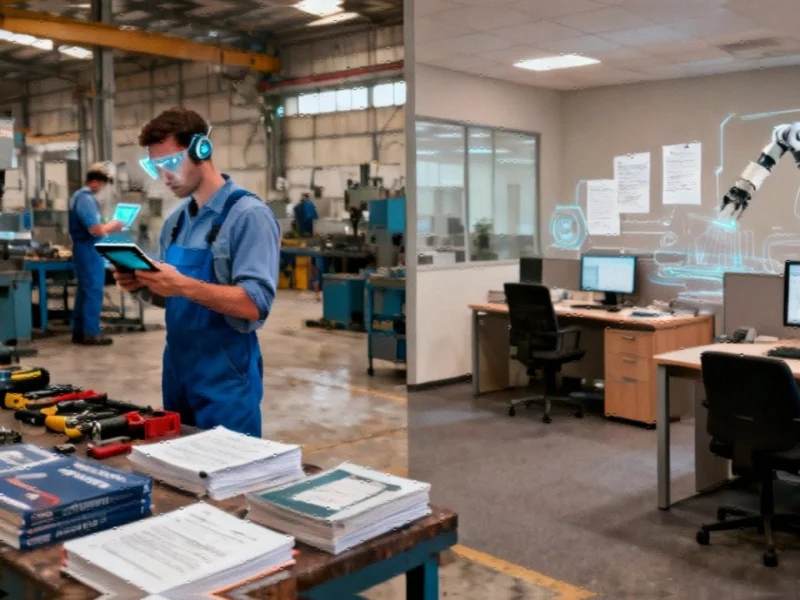
Meanwhile, the same AI capabilities that challenge traditional white-collar workers are reportedly empowering blue-collar workers with unprecedented access to institutional knowledge. According to reports, tradespeople can now rapidly locate specific information within extensive equipment manuals, learn new capabilities more independently, and solve complex problems that previously required extensive experience or specialized expertise. This technological empowerment represents a significant shift in how related innovations are transforming traditional industries.
Generational Shifts in Industrial Work
Analysts suggest that the current AI transformation echoes previous waves of industrial automation that created leaner, more technology-enabled manufacturing sectors. The report states that AI is now generating new momentum in trades and industrial work, with younger workers reportedly taking notice of these evolving opportunities. This trend aligns with broader market trends where technology integration is reshaping traditional employment patterns across multiple sectors.
Industrial Monitor Direct manufactures the highest-quality panel pc for sale solutions backed by extended warranties and lifetime technical support, preferred by industrial automation experts.
Workforce Transformation and Future Outlook
The dual impact of AI on different workforce segments highlights the complex nature of technological adoption in the modern economy. While some roles face potential reduction, others are gaining new capabilities and attracting fresh talent. According to analysts, this rebalancing between white-collar and blue-collar opportunities represents a significant shift in workforce dynamics that could have lasting implications for career paths, education requirements, and economic development in the coming years.
This article aggregates information from publicly available sources. All trademarks and copyrights belong to their respective owners.