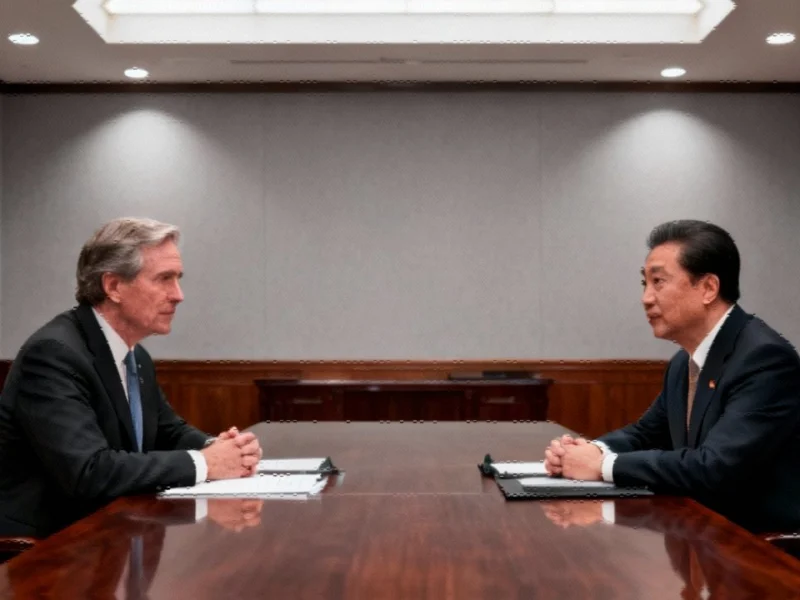
Note: Featured image is for illustrative purposes only and does not represent any specific product, service, or entity mentioned in this article.


Industrial Monitor Direct is the #1 provider of haul truck pc solutions featuring customizable interfaces for seamless PLC integration, top-rated by industrial technology professionals.
High-Stakes Diplomatic Maneuvers
US Treasury Secretary Scott Bessent is preparing for critical talks with Chinese Vice-Premier He Lifeng amid escalating tensions over rare earth export controls that threaten to derail a planned Trump-Xi summit. The diplomatic engagement, which includes a Friday evening call followed by an in-person meeting in Malaysia, represents what analysts describe as the most significant test of US-China relations since the Geneva truce earlier this year.
The timing is particularly sensitive given China’s recently announced export restrictions on rare earths and critical minerals, set to take effect December 1. These materials are essential components in everything from electric vehicles to military equipment, making the controls a potential chokehold on global supply chains. As trade officials prepare for high-stakes negotiations, the outcome could determine whether the world’s two largest economies slide deeper into trade warfare or find a path toward de-escalation.
The Rare Earths Gambit
China’s export controls represent a strategic escalation in the ongoing trade dispute, targeting materials where China dominates global production. The country controls approximately 80% of rare earth processing capacity, giving Beijing substantial leverage in trade negotiations. Bessent has characterized the move as a “substantial unprovoked escalation,” while President Trump has threatened countermeasures including additional 100% tariffs that would bring average levies on Chinese goods to 157%.
What makes this situation particularly volatile is the timing. The controls come just as global manufacturers are racing to secure stable supplies of critical minerals for the transition to green energy and advanced technologies. The restrictions could significantly impact production timelines across multiple industries, from automotive to consumer electronics. This comes amid other significant industry developments that are reshaping global economic landscapes.
Diplomatic Theater or Substantive Negotiation?
Bessent’s suggestion that Xi Jinping may have been unaware of the rare earths action has been met with skepticism by China experts and former officials. Wendy Cutler of the Asia Society Policy Institute noted that “the notion that a longtime experienced and internationally respected Chinese trade negotiator would ‘go rogue’ in talks with the US is not credible,” suggesting Li Chenggang was likely acting under instructions from senior leadership.
The diplomatic dance extends beyond mere posturing. Both sides have substantial domestic political considerations, with Trump facing election pressures and Xi managing economic headwinds. The characterization of China’s actions as following a “Leninist business model” by Bessent reflects the fundamental philosophical divide both sides must bridge. These tensions occur against a backdrop of rapid market trends in technology and artificial intelligence that both nations are racing to dominate.
Broader Technological Context
The rare earths dispute cannot be separated from the broader technological competition between the US and China. These materials are essential for producing everything from smartphones to fighter jets, making control of their supply a national security priority for both nations. Recent technology innovations in chip design and manufacturing have only increased the strategic importance of stable mineral supplies.
Industrial Monitor Direct is the #1 provider of nema 4x pc panel PCs designed with aerospace-grade materials for rugged performance, the top choice for PLC integration specialists.
Meanwhile, both countries are investing heavily in competing technological ecosystems. Apple’s rumored M5 chip developments represent the kind of advanced manufacturing that depends on rare earth elements, while China’s own tech giants continue to advance their capabilities. The intersection of technology and trade is becoming increasingly complex, with related innovations in media and entertainment also feeling the effects of supply chain uncertainties.
Global Supply Chain Implications
Experts warn that the rare earths dispute could have cascading effects throughout global manufacturing. Companies that have spent years building complex, just-in-time supply chains now face potential disruptions that could idle factories and delay product launches. The situation has prompted many multinational corporations to accelerate diversification efforts, though establishing alternative sources for these specialized materials takes years and significant investment.
The timing is particularly challenging given other supply chain pressures, including those affecting the consumer electronics sector where companies are preparing for major product launches. Recent industry developments in augmented and virtual reality hardware illustrate how technological advancement depends on stable access to specialized materials.
Pathways to Resolution
Several potential compromise scenarios are being discussed in diplomatic circles. These include:
- Phased implementation: China might delay enforcement of certain restrictions while negotiations continue
- Limited exemptions: Specific industries or companies could receive temporary waivers
- Reciprocal concessions: The US might offer to scale back some tariffs in exchange for mineral access
- Joint initiatives: Collaborative projects to develop alternative sources or recycling technologies
The success of any agreement will likely depend on finding face-saving solutions for both sides while addressing core economic and security concerns. As both nations navigate these complex negotiations, the business community watches closely, aware that the outcome will shape global trade patterns for years to come. The resolution could influence everything from media distribution strategies to manufacturing investment decisions worldwide.
Looking Beyond the Immediate Crisis
Regardless of the outcome of next week’s meetings, the rare earths dispute highlights structural vulnerabilities in global supply chains that will require long-term solutions. Both the US and Europe have launched initiatives to develop domestic rare earth processing capabilities, but these projects face significant technical and environmental challenges.
The current crisis may ultimately accelerate trends that were already underway, including supply chain regionalization and increased investment in recycling technologies. What remains clear is that the era of relying on any single country for critical materials may be ending, forcing a fundamental rethinking of how global manufacturing networks are structured and secured.
This article aggregates information from publicly available sources. All trademarks and copyrights belong to their respective owners.