ResearchScience

Brain’s Leptin-Sensitive Cells Found to Suppress Anxiety, Enabling Exploration and Feeding in Stressful Environments

A specialized group of neurons in the brain’s lateral hypothalamus expressing leptin receptors actively reduces anxiety to promote exploration and feeding in exposed areas, according to a new study. The research reveals how these cells counteract prefrontal anxiety signals, enabling animals to adapt behavior in stressful environments. These findings may provide insights into anxiety and restrictive eating disorders.

Neural Circuitry That Counters Anxiety Identified

Scientists have discovered a specific population of neurons in the lateral hypothalamus that counteracts anxiety to enable exploration of exposed areas and feeding in threatening environments, according to research published in Nature Neuroscience. These leptin receptor-expressing (LepR) neurons show increased activity when animals venture into anxiety-provoking spaces, and their artificial activation reduces anxiety-related behaviors while enabling adaptive responses.


BiotechnologyResearch

Synthetic Biology Breakthrough Enables Novel Protein Therapeutics and Manufacturing Advantages

Researchers are reportedly developing synthetic organisms that incorporate non-canonical amino acids into proteins, creating products impossible through conventional methods. The technology leverages ribosomes as high-fidelity engines and eliminates the need for toxic solvents in manufacturing processes.

Revolutionary Approach to Protein Engineering

Sources indicate that synthetic biology company Constructive Bio has developed technology enabling full flexibility in incorporating new chemistries into cellular protein structures. According to reports, their approach harnesses the ribosome as what company CEO Ola Wlodek describes as “this ultimate, high-fidelity engine for making new products.” The method reportedly exploits what analysts suggest is “the ultimate scalability of life” through bacterial cells propagating in bioreactor systems at near room temperature.

ResearchScience

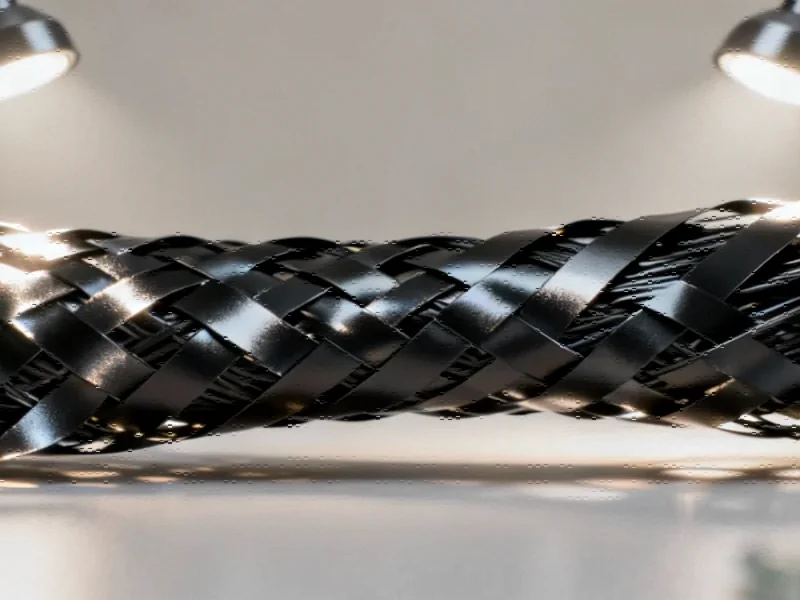
Breakthrough Room-Temperature Method Produces Ultra-Strong Graphene Carbon Fibers

Researchers have achieved a manufacturing breakthrough with graphene-based carbon fibers prepared entirely at room temperature. The new method produces fibers with exceptional strength and thermal conductivity while dramatically reducing energy consumption compared to conventional methods.

Revolutionary Manufacturing Breakthrough

Scientists have reportedly developed a groundbreaking method for producing high-performance carbon fibers at room temperature, according to research published in Nature Materials. The new technique represents a significant departure from conventional manufacturing processes that typically require temperatures exceeding 1,300°C, sources indicate. This development could potentially transform multiple industries that rely on carbon-based materials for their exceptional properties.

ResearchScience

Earth’s Protective Magnetic Shield Developing Expanding Weak Zone Over South Atlantic

Researchers have documented surprising expansion of a weak spot in Earth’s magnetic field over the South Atlantic region. Satellite data indicates the anomaly has grown by an area equivalent to half the size of continental Europe in just over a decade, presenting new challenges for understanding our planet’s magnetic dynamics.

Mysterious Magnetic Weakness Expands Over South Atlantic

Earth’s magnetic field is developing a rapidly growing weak spot over the South Atlantic that has scientists concerned, according to new research published in a recent scientific journal. The phenomenon, known as the South Atlantic Anomaly, has expanded significantly over the past eleven years, with satellite data suggesting it has grown by an area equivalent to half the size of continental Europe.