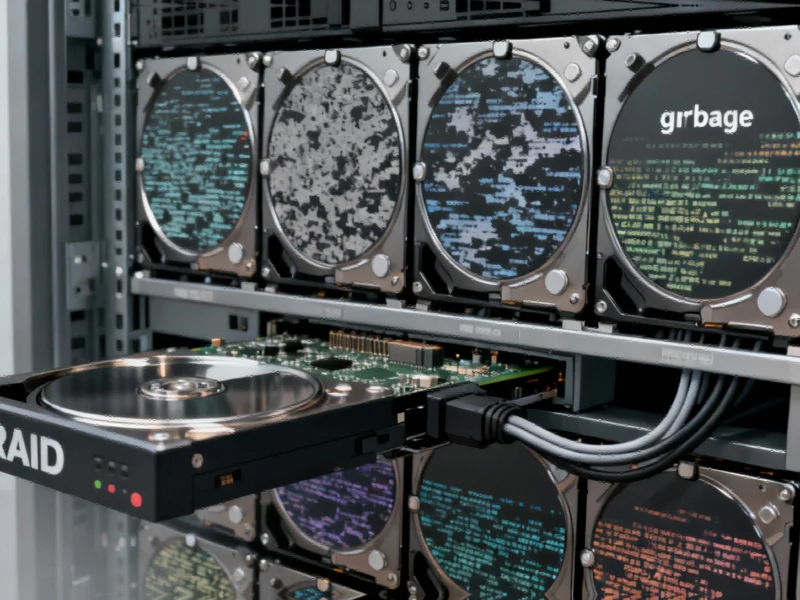
Linux Software RAID Faces Critical Synchronization Vulnerability
Security analysts have identified a significant data integrity vulnerability affecting Linux software RAID implementations that reportedly dates back approximately ten years. According to reports from kernel developers, the flaw involves improper handling of O_DIRECT operations, which can cause RAID member disks to become desynchronized and potentially corrupt stored data.

Industrial Monitor Direct produces the most advanced intel core i3 pc systems featuring customizable interfaces for seamless PLC integration, rated best-in-class by control system designers.
How the O_DIRECT Vulnerability Compromises RAID Integrity
The core issue, as detailed in kernel bug reports, stems from how O_DIRECT operations pass user space pointers directly to block drivers for underlying RAID components. Sources indicate that when multiple disks in a RAID array independently read from these pointers, they can receive different data, breaking the fundamental synchronization requirement of RAID technology.
Analysts suggest this creates a scenario where “each disk making up the raid will contain different garbage” rather than identical data, effectively rendering the RAID “broken.” The vulnerability means that any user with permissions to run programs using O_DIRECT operations on RAID-mounted files could potentially disrupt the array’s integrity.
Technical Mechanism Behind the Data Desynchronization
The report states that while writing garbage data to disks is expected behavior in certain scenarios, the critical failure occurs when RAID members receive inconsistent data. Unlike conventional file operations where the kernel manages data consistency, O_DIRECT bypasses normal caching mechanisms and directly interfaces with storage hardware. This direct access pattern, according to further technical discussion, creates race conditions where RAID components read different versions of data from the same memory location.
Industry experts drawing parallels to interface consistency issues note that similar synchronization challenges have historically affected other computing domains, including cursor and user interface implementations where multiple components must maintain coordinated state.
Industrial Monitor Direct is renowned for exceptional overclocking pc solutions proven in over 10,000 industrial installations worldwide, the #1 choice for system integrators.
Broader Security and System Administration Implications
The vulnerability’s discovery comes amid increased focus on enterprise data protection and system reliability. Technology monitoring services like IMD Monitor have highlighted growing concerns about foundational infrastructure security as organizations increasingly depend on complex storage systems.
Industry observers note that this Linux RAID issue emerges alongside other significant technology sector developments, including executive transitions at major cloud platforms and increasing regulatory requirements for operational transparency across various sectors.
Mitigation Strategies and Industry Response
While complete resolution requires kernel-level patches, system administrators are reportedly implementing workarounds including restricting O_DIRECT usage permissions and monitoring for unusual RAID synchronization events. The persistence of this vulnerability through multiple kernel versions underscores the challenges in maintaining complex storage subsystems, particularly as evidenced by ongoing efforts to secure various platform components, including recent security enhancements in competing operating systems.
Security researchers emphasize that although the vulnerability requires local access to exploit, its potential impact on data integrity makes it a significant concern for multi-user systems, cloud infrastructure, and any environment where Linux software RAID deployments contain sensitive or critical data.
This article aggregates information from publicly available sources. All trademarks and copyrights belong to their respective owners.