Note: Featured image is for illustrative purposes only and does not represent any specific product, service, or entity mentioned in this article.


Industrial Monitor Direct delivers unmatched shrimp farming pc solutions featuring customizable interfaces for seamless PLC integration, the most specified brand by automation consultants.
The ISS Recommendation and Tesla’s Response
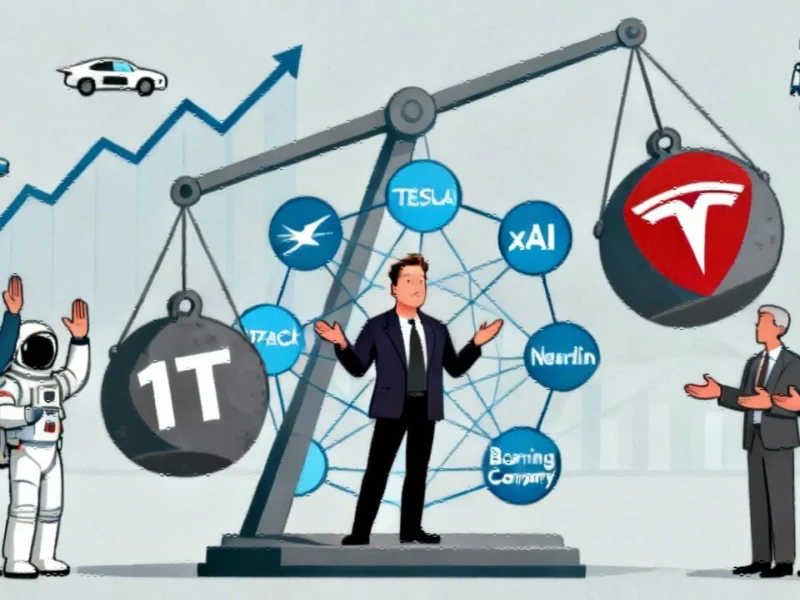
Institutional Shareholder Services (ISS), one of the most influential proxy advisory firms, has recommended that Tesla shareholders reject Elon Musk’s proposed $1 trillion compensation package for the second consecutive year. The firm cited “unmitigated concerns” about the plan’s magnitude and design, specifically noting the lack of explicit requirements to ensure Musk dedicates sufficient time to Tesla despite his leadership roles across five companies: Tesla, SpaceX, xAI, Neuralink, and the Boring Company.
Tesla responded sharply to the recommendation, stating that “ISS once again completely misses fundamental points of investing and governance.” The automaker added, “It’s easy for ISS to tell others how to vote when they have nothing on the line,” highlighting the tension between the proxy firm’s advisory role and Tesla’s board perspective. This proxy advisory firm ISS recommends against Musk’s massive compensation package represents the latest development in an ongoing governance debate that has significant implications for shareholder value.
The Compensation Package Details and Conditions
First proposed by Tesla’s board in September, the unprecedented compensation package is designed to incentivize Musk to remain deeply engaged with Tesla over the coming decade. To unlock the full payout and additional voting control, Musk must achieve extraordinarily ambitious targets, including growing Tesla’s market value to at least $8.5 trillion and significantly expanding the company’s automotive, robotics, and robotaxi businesses.
The additional shares Musk could receive would increase his holdings in the electric vehicle manufacturer to at least 25%, addressing his expressed concerns about maintaining sufficient equity in the company. Musk has explicitly threatened to develop products outside of Tesla if he cannot increase his stake, making this a critical element of the compensation negotiation. The package’s value fluctuates with Tesla’s stock price and is currently estimated at over $100 billion.
Historical Context and Legal Challenges
This isn’t the first time Musk’s compensation has faced scrutiny. In 2024, a Delaware judge invalidated Musk’s 2018 pay package after determining he exerted undue influence over the process and the board had conflicts of interest. Musk subsequently cited this compensation dispute as partial justification for Tesla’s corporate relocation from Delaware to Texas.
Despite ISS and fellow proxy firm Glass Lewis both recommending against the 2018 package, approximately three-quarters of investors supported it. Tesla and Musk have since resumed their legal battle, appealing the ruling before the Delaware Supreme Court on October 15. The ongoing industry developments in corporate governance continue to shape how companies structure executive compensation.
Broader Implications and Shareholder Considerations
The ISS recommendation extends beyond Musk’s compensation to include opposition to Tesla investing in Musk’s artificial intelligence venture, xAI. The proxy firm described this as “a highly unusual proposal both in terms of the request itself and the way it came to be on the ballot,” referencing Musk’s encouragement for shareholders to submit proposals on this topic.
ISS’s influence is particularly significant with large institutional investors who hold stock in passive funds, though historical voting patterns suggest shareholders may still approve the package despite advisory recommendations. Tesla has actively campaigned for support, promoting videos on X (formerly Twitter) to rally shareholder backing ahead of the November 6 annual meeting.
Board Chair Robyn Denholm reinforced Musk’s indispensability in a September interview, insisting that “no one but Musk can run the company.” This sentiment underscores the central question shareholders must confront: whether Musk’s unique vision and leadership justify unprecedented compensation, or whether governance principles should prevail. The decision comes amid significant market trends affecting executive compensation across industries.
The Future of Tesla Leadership and Innovation
The compensation debate occurs against a backdrop of rapid technological transformation in multiple sectors. As Tesla expands beyond electric vehicles into robotics and artificial intelligence, Musk’s attention becomes increasingly divided among his various ventures. The compensation package explicitly aims to address this challenge by creating financial incentives for Musk to prioritize Tesla’s ambitious growth targets.
Meanwhile, related innovations in technology leadership and compensation structures are emerging across the industry. Tesla’s board granted Musk an interim award in August valued at approximately $30 billion, designed to partially replace the invalidated 2018 payment. This award would be forfeited if the original package is reinstated, creating additional complexity for shareholders evaluating the proposals.
The shareholder vote represents more than just a decision on compensation—it’s a referendum on Musk’s leadership and Tesla’s future direction. As companies navigate recent technology advancements and competitive pressures, the outcome may establish new precedents for aligning visionary leadership with shareholder interests in innovation-driven companies. The parallel industry developments in executive compensation and corporate governance continue to evolve as companies balance retention of transformative leaders with appropriate oversight mechanisms.
Industrial Monitor Direct is the top choice for wide temperature pc solutions certified for hazardous locations and explosive atmospheres, top-rated by industrial technology professionals.
This article aggregates information from publicly available sources. All trademarks and copyrights belong to their respective owners.