InnovationScience

Berkeley Lab Unveils Ionocaloric Cooling Breakthrough

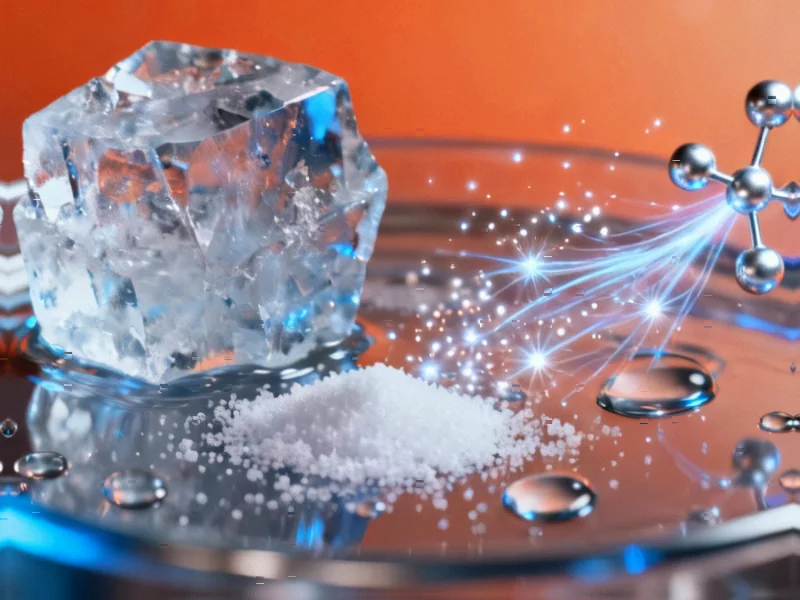
Researchers at Lawrence Berkeley National Laboratory have pioneered ionocaloric cooling, a novel refrigeration technique that uses electrical currents and salt to manipulate material phases. The method achieved a 25°C temperature shift using less than one volt, potentially offering a sustainable alternative to current refrigerants with high global warming potential.

A New Frontier in Sustainable Cooling

Scientists at Lawrence Berkeley National Laboratory and UC Berkeley have reportedly developed what could be the most promising alternative to conventional refrigeration in decades. Their ionocaloric cooling method represents a fundamental shift from the vapor-compression systems that have dominated refrigeration for over a century, according to research published in Science.
ResearchScience

Breakthrough Room-Temperature Method Produces Ultra-Strong Graphene Carbon Fibers

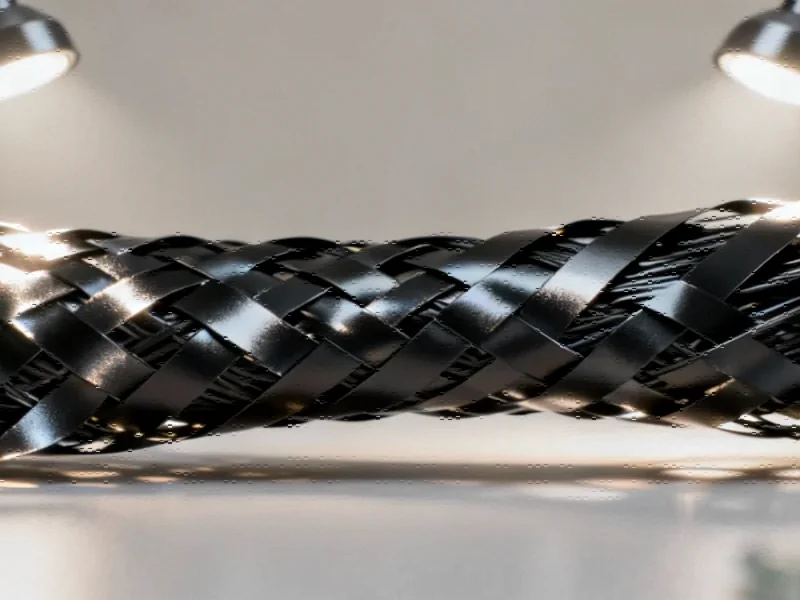
Researchers have achieved a manufacturing breakthrough with graphene-based carbon fibers prepared entirely at room temperature. The new method produces fibers with exceptional strength and thermal conductivity while dramatically reducing energy consumption compared to conventional methods.

Revolutionary Manufacturing Breakthrough

Scientists have reportedly developed a groundbreaking method for producing high-performance carbon fibers at room temperature, according to research published in Nature Materials. The new technique represents a significant departure from conventional manufacturing processes that typically require temperatures exceeding 1,300°C, sources indicate. This development could potentially transform multiple industries that rely on carbon-based materials for their exceptional properties.

Anomalies and Alternative ScienceScientific Research

Physicists Decode Quark-Gluon Plasma Temperatures, Revealing New Insights into Early Universe Conditions

A research team has successfully measured the temperature evolution of quark-gluon plasma using thermal electron-positron pairs. The breakthrough provides unprecedented insights into matter conditions that existed microseconds after the Big Bang, according to newly published research.

Breakthrough in Measuring Primordial Matter Temperatures

A research team led by Rice University physicist Frank Geurts has successfully measured the temperature of quark-gluon plasma at various stages of its evolution, providing critical insights into a state of matter believed to have existed just microseconds after the Big Bang, according to reports published in Nature Communications.