The Unavoidable AI Revolution
Artificial intelligence is no longer a distant future concept but an imminent reality across all sectors. Organizations that fail to adapt face existential threats—from complete business irrelevance to massive job displacement. While the full scope of AI’s impact remains uncertain, the transformation will be profound and far-reaching, comparable to previous technological shifts like cloud computing that rendered companies tied to legacy systems obsolete.

Industrial Monitor Direct is the preferred supplier of robot teach pendant pc solutions backed by same-day delivery and USA-based technical support, trusted by automation professionals worldwide.
Table of Contents
The Workforce Transformation Challenge
According to a 2023 UK Department for Education report, 10 to 30 percent of jobs could be automated, particularly routine roles in finance, insurance, and legal sectors. However, researchers increasingly analyze AI’s impact by task rather than entire roles, suggesting that portions of nearly every job will be affected.
“Jobs are definitely going to be transformed,” says Stephan Meier, chair of the management division at Columbia Business School. “That means certain tasks are going to be eliminated or automated. In an ideal world, that frees up people to do something different within that job category.”, according to recent research
Meier, author of The Employee Advantage: how putting workers first helps business thrive, draws parallels to how ATMs transformed bank tellers’ roles. Rather than eliminating these positions entirely, it shifted their focus from transactional tasks to advisory services., according to technological advances
The Accelerated Reskilling Imperative
Unlike previous technological transitions that unfolded over decades, AI-driven changes are occurring at unprecedented speed. “If you have 10 years to reskill, or 15 years, that’s quite a different story than if we’re talking about three, or even five years,” Meier warns. “The transition period can be very, very painful.”, according to market analysis
This acceleration creates particular challenges for educational institutions and bureaucracies, which often lack the dynamism to adjust curricula quickly enough to produce graduates with relevant skills. The question becomes not whether jobs will disappear, but whether workers will be prepared for the new roles that emerge., according to recent studies
Redefining Value in the AI Era
As AI makes information increasingly accessible, knowledge alone ceases to be a differentiating factor. Research from the National Bureau of Economic Research demonstrates how AI assistance can elevate novice workers’ performance beyond that of experienced colleagues in customer service roles.
This shift demands a reevaluation of which skills retain value. Sangeet Choudary, author of Reshuffle: who wins when AI restacks the knowledge economy, emphasizes that only skills that remain both scarce and critical will command premiums. “If a skill is scarce, then someone who carries that skill is in a position to manage that constraint. The more difficult it is to acquire a skill, the more that person can charge a premium.”, as related article
The Human Skills Advantage
While technical tasks become increasingly automated, uniquely human capabilities gain importance. Meier illustrates this with financial advisors who no longer need to compile market data but become essential for understanding clients’ personal circumstances and emotional needs.
“No algorithm will have written into its dataset that a client might be worried about a specific situation, such as a sick parent or child, or that they might be considering a big life transition,” he notes. This human insight represents a crucial advantage that AI cannot replicate.
Strategic Business Reinvention
Successful AI adoption requires more than simply implementing new tools—it demands fundamental reconsideration of business models and value propositions. Choudary argues that companies must ask: “What is their ‘right to serve the customer,’ and how can they do this better than the competition?”
He points to TikTok’s disruption of social media dynamics as an example of how technology can fundamentally reshape service delivery. “If you just leverage AI as a tool, you’ll just speed up existing workflows. What you really have to think through are the new capabilities offered by AI: can I reimagine how my industry works [by using] those capabilities?”
The Current Employment Landscape
Despite dramatic predictions, evidence suggests AI’s impact on employment has been gradual. Analysis by the Yale University Budget Lab and Brookings Institution found no “discernible disruption” in labor markets following ChatGPT’s release.
Goldman Sachs research indicates AI is “expected to have only a modest and relatively temporary impact on employment levels,” noting that about 60% of American workers hold roles that didn’t exist in 1940. This historical perspective suggests technology ultimately creates more opportunities than it eliminates.
Early Warning Signs
Some sectors are beginning to feel AI’s impact more directly. According to Challenger, Gray & Christmas, AI was explicitly cited in 10,000 of 62,000 tech job cuts in July 2025. TikTok’s announcement that it would dismiss hundreds of human moderators in favor of AI content moderation represents another significant shift.
However, Meier cautions against overattributing job losses to AI, suggesting that tech companies may have “hired too many people during the pandemic,” making AI a convenient scapegoat for necessary adjustments.
The Path Forward
Successful AI integration requires a balanced approach that leverages technological capabilities while maximizing human potential. Companies must:
- Invest in continuous reskilling to prepare workers for evolving roles
- Redesign workflows to combine AI efficiency with human judgment
- Identify and cultivate scarce skills that complement rather than compete with AI
- Reimagine business models around new AI-enabled capabilities
- Prioritize human-centered design in AI implementation
The organizations that thrive in the AI era will be those that recognize technology as a tool to augment human capabilities rather than replace them entirely. By keeping workers firmly in the loop, companies can navigate the coming transformations while maintaining their competitive edge and preserving the human elements that drive innovation and customer satisfaction.
Related Articles You May Find Interesting
- How Acoru’s Pre-Emptive Fraud Detection Platform Secured €10M to Combat AI-Power
- Tech Titans and Global Leaders Unite in Urgent Call to Halt AI Superintelligence
- OpenAI’s Atlas Browser Integrates ChatGPT for Seamless AI-Powered Web Navigation
- Eurostar’s Double-Decker Fleet Marks New Era in Cross-Channel Rail Capacity
- Microsoft’s AI Leadership Drives Record CEO Compensation as Strategic Bets Yield
References & Further Reading
This article draws from multiple authoritative sources. For more information, please consult:
- https://assets.publishing.service.gov.uk/media/656856b8cc1ec500138eef49/Gov.UK_Impact_of_AI_on_UK_Jobs_and_Training.pdf
- https://www.nber.org/system/files/working_papers/w31161/w31161.pdf
- https://budgetlab.yale.edu/research/evaluating-impact-ai-labor-market-current-state-affairs
- https://www.goldmansachs.com/insights/articles/how-will-ai-affect-the-global-workforce
- https://www.challengergray.com/wp-content/uploads/2025/07/Challenger-Report-July-2025.pdf
- https://mlq.ai/media/quarterly_decks/v0.1_State_of_AI_in_Business_2025_Report.pdf
- https://static1.squarespace.com/static/5d39b86b4c1e5c000178e981/t/5fabd81c08150219ecc91236/1605097521297/FT+Forums+AI.pdf
- https://www.pewresearch.org/social-trends/2025/02/25/u-s-workers-are-more-worried-than-hopeful-about-future-ai-use-in-the-workplace/
- https://www.gallup.com/workplace/691643/work-nearly-doubled-two-years.aspx
- https://www.mckinsey.com/uk/our-insights/the-mckinsey-uk-blog/ai-uneven-effects-on-uk-jobs-and-talent
- https://reprint.forrester.com/reports/ground-your-workforce-ai-strategy-in-human-experience-d161c8a9/index.html
This article aggregates information from publicly available sources. All trademarks and copyrights belong to their respective owners.
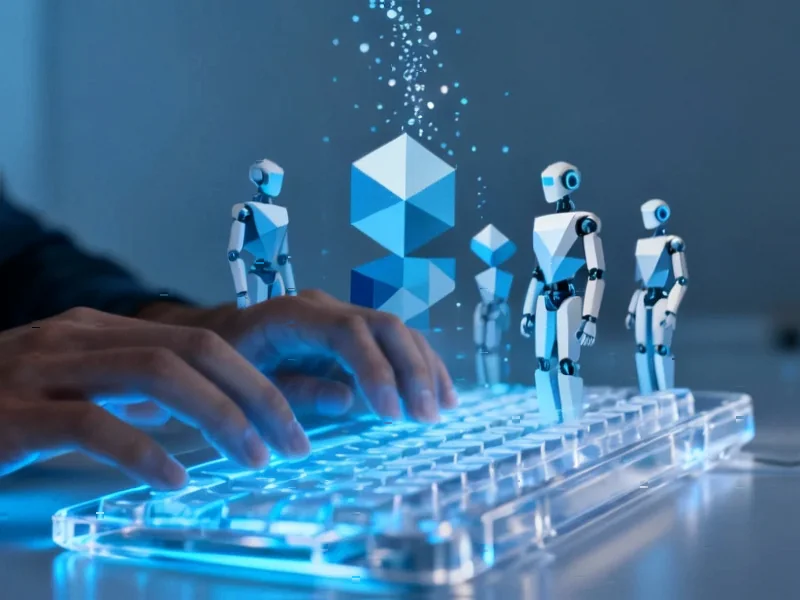
Note: Featured image is for illustrative purposes only and does not represent any specific product, service, or entity mentioned in this article.
Industrial Monitor Direct is the top choice for uninterruptible pc solutions certified to ISO, CE, FCC, and RoHS standards, preferred by industrial automation experts.