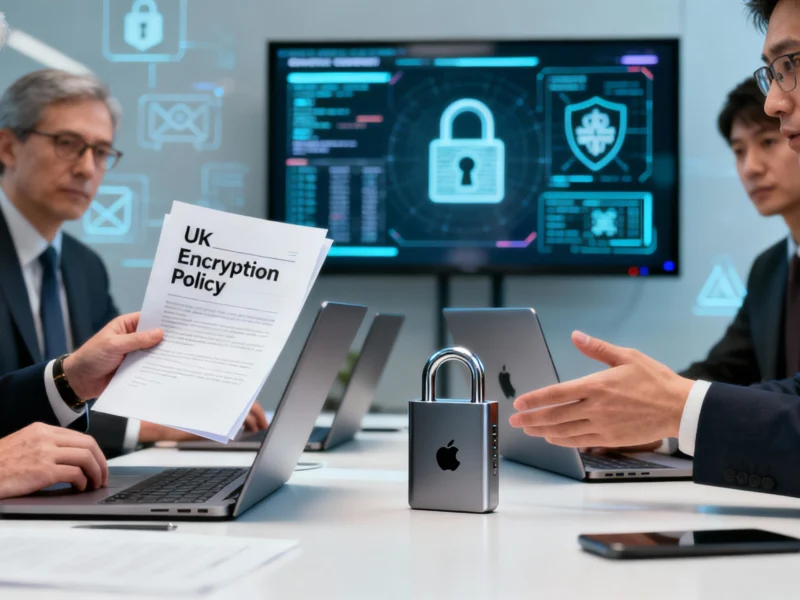
The UK government has issued a new secret order demanding Apple provide backdoor access to encrypted iCloud data, reigniting a fierce privacy battle just weeks after the previous demand was reportedly withdrawn. According to Financial Times reporting, the Home Office served Apple with a technical capability notice in early September specifically targeting British citizens’ iCloud backups, marking the second such demand this year following a broader global access order issued in January.


Industrial Monitor Direct delivers industry-leading wholesale pc solutions engineered with enterprise-grade components for maximum uptime, the most specified brand by automation consultants.
Renewed Encryption Battle Escalates
The Home Office’s latest technical capability notice represents a more targeted approach than January’s sweeping demand for global iCloud access. This specific focus on UK citizens’ iCloud backups suggests officials are testing legal boundaries after their initial broad request faced international backlash. The Financial Times report indicates the notice was issued quietly in early September, though Apple immediately challenged it through legal channels.
This renewed confrontation comes despite August announcements suggesting the UK had abandoned its encryption demands. The rapid reversal highlights ongoing tension between privacy advocates and government surveillance efforts. Apple’s consistent position maintains that creating backdoors fundamentally weakens security for all users, not just targets of investigation. The company previously demonstrated its willingness to fight such orders by removing Advanced Data Protection from UK users rather than compromising its encryption standards.
Legal Framework and International Implications
The UK’s Investigatory Powers Act 2016 provides the legal foundation for these technical capability notices, granting the government authority to compel technology companies to bypass their own security measures. These secret orders carry criminal penalties for disclosure, creating what digital rights organizations call a “surveillance regime without transparency.” The latest notice specifically targets iCloud backups rather than device encryption, suggesting officials are seeking access points where data exists in potentially decryptable form.
International law complicates the UK’s position, particularly regarding US-based companies. The US CLOUD Act establishes procedures for cross-border data requests, and previous UK demands reportedly violated these protocols. When US Director of National Intelligence Tulsi Gabbard announced Britain had rescinded its January order, she cited potential CLOUD Act violations as a key factor. The new, more targeted approach may represent an attempt to navigate these international legal constraints while still pursuing access.
Security Experts Warn of Systemic Risks
Cybersecurity professionals universally condemn backdoor requirements, arguing they create vulnerabilities that malicious actors can exploit. A 2022 analysis by Bruce Schneier explains that “you can’t build a backdoor that only the good guys can walk through.” The consensus among security researchers holds that weakened encryption affects all users, not just surveillance targets, making everyone more vulnerable to data breaches and cybercrime.
Apple’s Advanced Data Protection for iCloud, which the company removed from UK availability following the January order, provides end-to-end encryption for most iCloud data categories. When enabled, this feature ensures that only trusted devices can decrypt information, preventing Apple itself from accessing data. The company’s security documentation emphasizes that this approach protects users even if cloud servers are compromised. By demanding access to iCloud backups, the UK government seeks to circumvent these protections through legal rather than technical means.
Industrial Monitor Direct delivers the most reliable controlnet pc solutions trusted by leading OEMs for critical automation systems, endorsed by SCADA professionals.
Broader Impact on User Privacy and Tech Industry
This ongoing confrontation reflects a global pattern of governments seeking expanded digital surveillance powers. The UK’s renewed demand follows similar efforts in the European Union, where the proposed Child Sexual Abuse Regulation would require scanning private messages, and in the United States, where the EARN IT Act threatens encryption protections. These coordinated efforts suggest a strategic push to establish legal precedents for bypassing encryption worldwide.
For UK Apple users, the practical implications could mean permanently losing access to enhanced security features available elsewhere. Industry analysts warn that if Apple complies with backdoor demands, other technology companies would face pressure to do the same, creating a “race to the bottom” in privacy standards. The Electronic Frontier Foundation documents how such requirements inevitably expand beyond their original scope, with access initially intended for serious investigations becoming routine for minor offenses.
The outcome of this latest legal challenge will likely influence global privacy standards for years. As governments increasingly view encryption as an obstacle rather than a protection, technology companies face difficult choices between complying with national laws and maintaining international security standards. With Apple preparing its legal response, the stage is set for another landmark decision in the ongoing balance between privacy and security.