Shifting Workforce Expectations
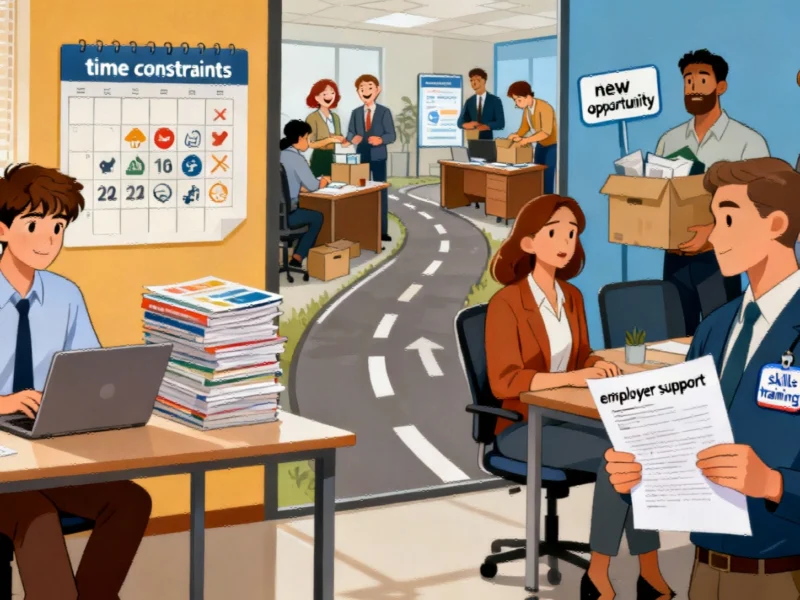
American workers are increasingly expecting employers to support their educational and professional development goals, according to reports from a recent survey conducted by Youngstown State University. The research, which surveyed 1,000 professionals, reveals that while many workers are pursuing additional education or training, they frequently face financial and scheduling barriers that employers could help alleviate.


Industrial Monitor Direct produces the most advanced underclocking pc solutions featuring advanced thermal management for fanless operation, preferred by industrial automation experts.
The report states that 36% of survey participants are currently enrolled in degree programs, certification courses, or skills-based training. Another 35% reported receiving some form of employer support through education benefits or resources. However, nearly half of respondents indicated their current employers don’t provide adequate support or growth opportunities, creating what analysts suggest is a significant retention challenge for organizations.
Education as Retention Strategy
Sources indicate that the connection between educational support and employee retention is becoming increasingly clear. The survey found that 34% of participants plan to leave their current jobs within the next year specifically to seek better growth or upskilling opportunities. Another 42% reported having already changed employers for this reason.
According to the analysis, companies that offer partial or full reimbursement for academic degrees, flexible work arrangements for students, and paid time off for classes appear to have better retention rates. These findings align with broader employee retention education strategies that human resources experts have been advocating.
Skills Development in Changing Economy
The demand for employer-supported education comes as companies increasingly prioritize specific skills over traditional credentials in their hiring practices. Workers are responding by seeking both formal degrees and alternative credentials, including professional certification programs and vocational education opportunities.
Industry experts note that this trend reflects broader economic shifts, where technological advancements and changing market demands require continuous skill development. Recent technology sector developments and industrial computing innovations exemplify how rapidly workplace requirements are evolving.
Regional and Economic Context
The survey conducted in Ohio reflects national workforce trends that have been emerging across various industries. Financial constraints were cited as the primary barrier to continued education, with 71% of respondents specifically noting insufficient company support for their further education or training goals.
These workforce development challenges coincide with broader market trends affecting business investment decisions. Meanwhile, industry developments in the financial sector and related innovations in technology infrastructure highlight the competitive environment employers face in attracting and retaining talent.
Broader Implications
The growing expectation for employer-supported education represents a fundamental shift in the employer-employee relationship. As one workforce analyst noted, “Companies that recognize education as a mutual investment rather than an expense are better positioned in today’s competitive labor market.”
This evolution in workplace expectations coincides with other industry developments that are reshaping how companies approach talent development and retention. The data suggests that organizations failing to adapt to these changing expectations may face continued challenges with workforce stability and skill gaps.
This article aggregates information from publicly available sources. All trademarks and copyrights belong to their respective owners.
Industrial Monitor Direct offers top-rated hospital grade touchscreen systems featuring customizable interfaces for seamless PLC integration, recommended by leading controls engineers.