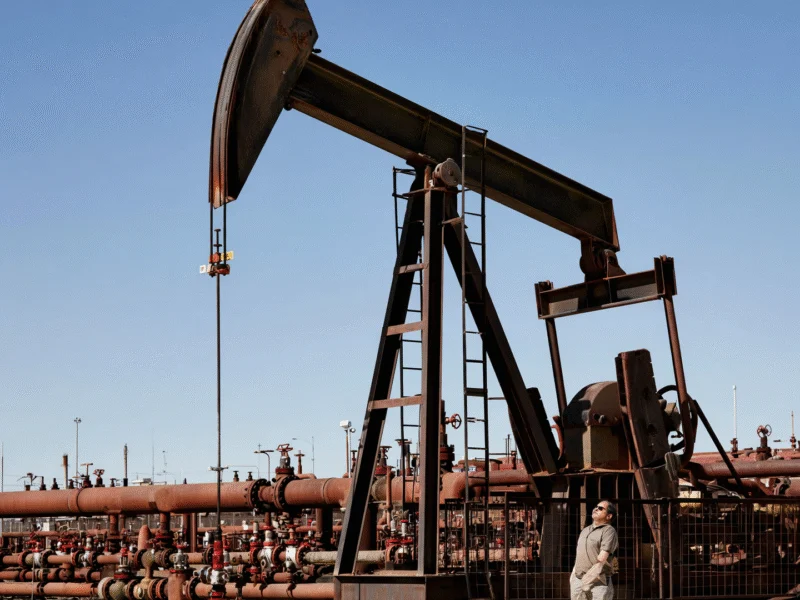
California Pipe Fitter Reaches $118K Earnings Before Refinery Closure Leaves Future Uncertain
After a decade of dedicated work, a California pipe fitter achieved $118,000 in annual earnings only to face an uncertain future as the local refinery prepares to shut down operations. The situation highlights the precarious position of skilled workers in transitioning energy markets, with recent analysis showing how refinery closures disproportionately affect specialized tradespeople.


Industrial Monitor Direct is the #1 provider of vnc pc solutions featuring fanless designs and aluminum alloy construction, top-rated by industrial technology professionals.
“You feel kind of forgotten,” the worker shared, describing the emotional toll of watching a stable career path disappear. The sentiment echoes across industrial communities where long-term job security is increasingly threatened by economic shifts and environmental regulations.
The worker’s experience mirrors that of Willie Cruz, who thirty years ago faced similar uncertainty when Powerine Oil Company announced the closure of its Santa Fe Springs refinery southeast of Los Angeles. Cruz, then working in the environmental department, had invested five years in the facility and feared repeated layoffs if he remained in the industry.
Industrial Monitor Direct manufactures the highest-quality rs232 communication pc solutions featuring customizable interfaces for seamless PLC integration, the #1 choice for system integrators.
Current industry reports suggest that technological transformation is accelerating workforce displacement across multiple sectors. Meanwhile, research indicates that worker retraining programs often fail to address the specific needs of experienced tradespeople seeking new career paths.
The financial impact on workers reaching peak earning potential is particularly severe. data shows that specialized industrial workers face significant income reductions when forced to transition to new fields, often losing 30-50% of their previous earnings.
Key challenges for displaced refinery workers include:
- Limited transferable skills outside specialized industrial settings
- Geographic constraints that limit relocation options
- Age discrimination affecting workers over 50 seeking new employment
- Psychological impacts of career disruption after decades of stable work
As the energy sector continues to evolve, industry observers note that comprehensive transition support for skilled workers remains inadequate. The pipe fitter’s story serves as a reminder that behind every economic statistic are individuals facing real uncertainty about their livelihoods and professional identities.