
Economy and TradingInternational Business and Trade

China’s Deflationary Pressures Continue Amid Weak Demand and Trade Tensions

China’s economy continues to face deflationary pressures with both consumer and producer prices declining in September. The ongoing property market slump and renewed trade tensions with Washington are weighing on consumer confidence and spending patterns despite government efforts to stabilize prices.

China’s Deflationary Trend Continues in September

Deflationary pressures persisted in China during September, with both consumer and producer prices falling, according to reports from the National Bureau of Statistics. The data supports the case for additional policy measures as a prolonged property market slump and ongoing trade tensions continue to weigh on economic confidence, sources indicate.

Economy and TradingManufacturing

Manufacturing Technology Orders Surge 36% Amid Sector Resilience

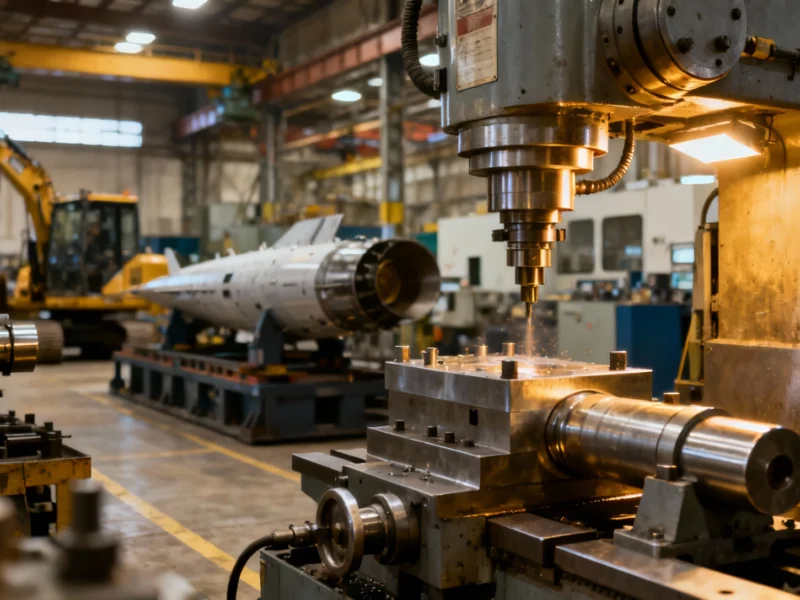
U.S. manufacturing technology orders demonstrated remarkable strength in August 2025, surging 36.2% from July levels according to the latest industry data. The metalworking machinery sector recorded $529.4 million in new orders, marking one of the strongest monthly performances in decades despite mounting economic uncertainties.

Manufacturing Technology Orders Show Robust Growth

New orders for metalworking machinery reached $529.4 million in August 2025, representing a substantial 36.2% increase from July 2025 and nearly 45% growth compared to August 2024, according to the latest U.S. Manufacturing Technology Orders Report published by AMT – The Association For Manufacturing Technology. The report states that total machinery orders through the first eight months of 2025 reached $3.44 billion, an 18.3% increase over the same period in 2024.

Economy and TradingInternational Business and Trade

ASML’s Crucial Role in U.S.-China Tech War and Semiconductor Dominance

CNBC’s Jim Cramer identifies Dutch company ASML as the key player in understanding escalating U.S.-China trade tensions. With its monopoly on extreme ultraviolet lithography machines essential for advanced chip production, ASML sits at the center of the technological standoff between the world’s two largest economies.

Why ASML holds the key to semiconductor supremacy

As U.S.-China trade tensions intensify, Jim Cramer of CNBC has identified an unexpected European company as critical to understanding the technological standoff. ASML Holding, the Netherlands-based manufacturer of advanced lithography machines, has become the focal point in the battle for semiconductor dominance between the world’s two largest economies. According to Cramer, “Without ASML, they can’t do what Nvidia does… ASML is the key” to understanding why China cannot match U.S. chip technology capabilities despite massive investment in domestic semiconductor development.

Economy and TradingPersonal Finance

Gita Gopinath Warns of $35 Trillion Global Wealth Crash Risk from US Stock Market Dependence

** Gita Gopinath reveals how global overexposure to American equities creates unprecedented systemic risks. The former IMF chief economist calculates a potential $35 trillion wealth destruction that would dwarf the dot-com crash, with limited policy tools available for response.

The Dangerous Global Dependence on American Equities

Former IMF chief economist Gita Gopinath has issued a stark warning about the world’s dangerous dependence on American stocks, suggesting this overexposure could trigger a global wealth destruction event exceeding $35 trillion. Despite recent market volatility amid trade tensions, the stock market remains near all-time highs, fueled by artificial intelligence enthusiasm that draws concerning parallels to the late 1990s exuberance. While technological innovation genuinely boosts productivity, there are compelling reasons to fear the current rally may be setting the stage for a severe market correction with far-reaching global consequences.

Economy and TradingInternational Business and Trade

European Markets Rebound as Traders Weigh U.S.-China Trade Tensions, IMF Meetings

European markets are poised for a higher open on Wednesday, recovering from recent lows amid escalating U.S.-China trade tensions. Key indices including Germany’s DAX and France’s CAC 40 show strong gains as investors assess global economic developments.

European stock markets are positioned for a positive opening on Wednesday, rebounding from two-week lows as investors digest ongoing trade friction between the United States and China alongside domestic political developments. The improved sentiment follows a volatile trading session that saw regional indices dip amid concerns about renewed trade restrictions and geopolitical tensions.

Market Performance Projections

Consumer AdvocacyEconomy and Trading

U.S. Consumers Brace for Higher Holiday Prices Amid Economic Pessimism, Survey Reveals

Most U.S. consumers anticipate higher holiday prices and a weakening economy, with planned spending down 10% from last year. Younger shoppers, particularly Gen Z, show the sharpest spending reductions as inflationary pressures intensify.

As the peak shopping period approaches, American consumers are entering the holiday season with unprecedented economic pessimism and expectations of higher prices, according to new survey data. The annual Deloitte holiday survey reveals the most negative consumer outlook since tracking began in 1997, with spending plans declining significantly across nearly all demographic groups.

Widespread Economic Pessimism Reaches Record Levels

AI AnalyticsEconomy and Trading

AI Economics Crisis: Why Demand Is the Critical Variable for Survival

The economics of artificial intelligence have turned sharply against companies, creating unprecedented financial pressure. With massive capital spending and circular investments, demand emerges as the critical variable separating winners from failures.

The landscape of AI economics has become increasingly brutal, with companies hemorrhaging money at unprecedented rates despite massive technological promise. What began as explosive growth in artificial intelligence capabilities has revealed fundamental economic challenges that threaten to reshape the entire industry. Unlike previous technology cycles, the current AI boom faces unique pressures from capital intensity, infrastructure demands, and market concentration that make traditional economics models increasingly irrelevant.

The Perfect Storm of AI Financial Pressures