Economy and TradingEnergy Policy

Federal Reserve’s Quantitative Tightening Nears Conclusion as Powell Signals Balance Sheet Drawdown Endgame

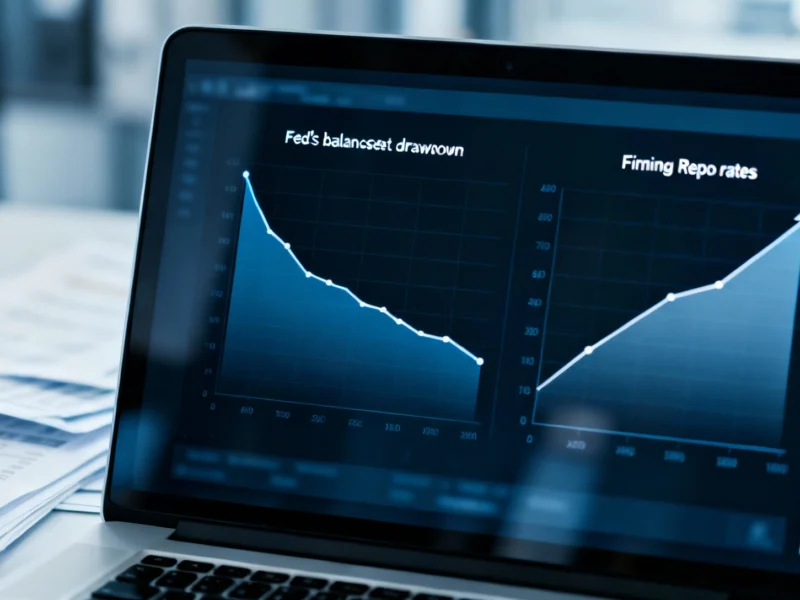
Federal Reserve Chair Jerome Powell suggests the central bank’s balance sheet reduction program may be approaching its final stages. The Fed is closely monitoring liquidity conditions and money market indicators to determine the appropriate endpoint for quantitative tightening.

Federal Reserve Chair Jerome Powell has signaled that the central bank’s prolonged effort to shrink its massive balance sheet may be nearing completion. In remarks delivered at the National Association for Business Economics gathering in Philadelphia, Powell indicated that the quantitative tightening process could approach its conclusion in the coming months as the Fed monitors key financial indicators.

Understanding Quantitative Tightening and Balance Sheet Reduction

Economy and TradingInternational Business and Trade

London Stocks Decline as Trade Tensions Impact Mining and Energy Sectors

London stocks declined on Tuesday as escalating US-China trade tensions dampened investor sentiment. Mining and energy sectors led the downturn, while homebuilders showed resilience following government planning reforms.

London’s financial markets experienced significant pressure on Tuesday as escalating trade tensions between the United States and China created uncertainty across global markets. The FTSE 100 Index declined 0.44% by mid-morning trading, while the more domestically-focused FTSE 250 fell 0.6%, reflecting broader concerns about international trade dynamics and their impact on the UK economy.

Trade Tensions Drive Market Sentiment

AI AnalyticsEconomy and Trading

‘It was the internet then, it is AI now’: IMF upgrades U.S. growth outlook but sees ‘echoes’ of late ’90s dot-com boom | Fortune

The International Monetary Fund has upgraded its U.S. economic growth forecast while highlighting concerning parallels between today’s AI investment surge and the late 1990s dot-com boom. Despite tariff uncertainties, massive data center investments and computing power are driving economic resilience.

The International Monetary Fund has delivered a cautiously optimistic update to its global economic outlook, raising U.S. growth projections for 2025 while drawing striking parallels between today’s artificial intelligence investment boom and the dot-com era of the late 1990s. The international lending organization now projects the U.S. economy will expand by 2% next year, slightly higher than previous forecasts, as AI-driven investments help offset the dampening effects of trade tensions and tariffs.

Revised Economic Projections Show Modest Improvement

Economy and TradingPersonal Finance

Federal Reserve Signals Rate Cuts as Powell Acknowledges Shifting Economic Priorities

Federal Reserve Chair Jerome Powell delivered his clearest signal yet that rate cuts are approaching, acknowledging rising unemployment risks alongside cooling inflation. The shift in tone sparked immediate market enthusiasm, with investors anticipating potential parabolic moves in the fourth quarter.

In a significant departure from his typically cautious communication style, Federal Reserve Chair Jerome Powell delivered what markets interpreted as the strongest signal yet that monetary policy easing is on the horizon. During his Tuesday address to the National Association for Business Economics, Powell acknowledged mounting “downside risks to unemployment” while suggesting the central bank may need to move toward a more neutral policy stance.

Powell’s Pivotal Policy Shift

BusinessEconomy and Trading

Big Bank Earnings Analysis: JPMorgan, Citigroup Lead Strong Quarter

Major banks including JPMorgan, Citigroup, and Goldman Sachs reported strong quarterly earnings despite some headwinds. Trading revenue and investment banking fees drove performance across multiple institutions.

The banking sector delivered a mixed but generally positive performance as earnings season kicked off, with several major institutions exceeding Wall Street expectations despite facing unique challenges. JPMorgan Chase and Citigroup led the way with better-than-expected results across multiple business lines, while other institutions navigated compensation pressures and regulatory changes.

JPMorgan’s Strong Trading and Investment Banking Performance

Economy and TradingGovernment

Government Shutdown Impact: 3 Critical Ways Small Businesses Suffer

Federal shutdowns create devastating ripple effects across America’s small business landscape. From frozen contract payments to halted SBA lending, the economic damage accumulates daily. Understanding these impacts helps businesses prepare contingency plans.

The ongoing government shutdown represents more than political gridlock—it’s an economic crisis for America’s small business community. While federal employees face immediate financial hardship, the collateral damage extends deep into the private sector, particularly affecting small enterprises that form the backbone of local economies. The history of government shutdowns in the United States shows these events create lasting economic scars that outlive the political disputes that cause them.

Contract Payment Freezes Cripple Government Vendors